

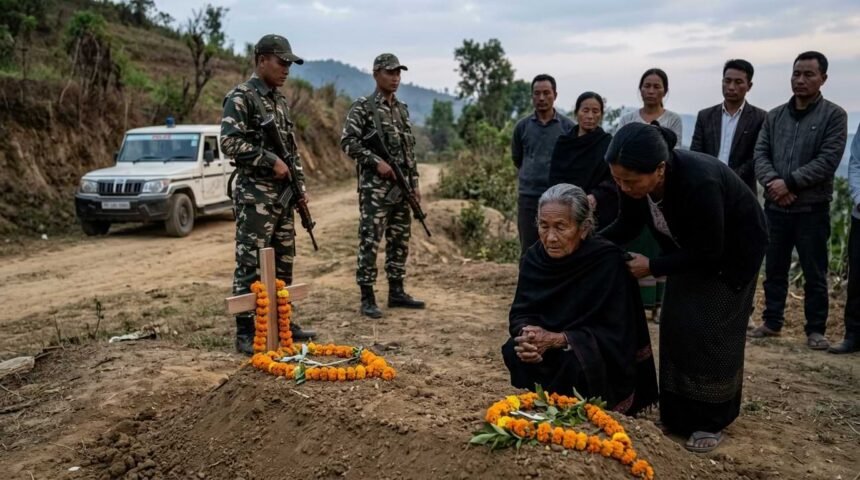
Again Manipur is burning and again New Delhi’s voice is louder than the gun fire. Ten days later, on June 11, just 24 hours after security forces dug up six mutilated bodies of Naga civilians from the ground in Kangpokpi district, armed men killed two Kuki community leaders in Kamjong district. The death toll has reached 260 since May 2023, and more than 60,000 people are still refugees in their own state, according to two additional names added to the list.
The two Kuki men who were killed on June 11 were not victims of random gunfire. They were community leaders the kind that can hold a divided society together when politicians don’t. Kuki civil organization in Kamjong says that the victims were linked to the local church, which is confirmed by Reuters. The situation is “tense and volatile,” an euphemism translated into bureaucratese as “We have no idea who did this, and we have no idea how to stop the next one.”
This most recent bloodshed was not just a random incident. It’s the direct, predictable consequence of a horror that occurred just one day ago. Nearly 24 hours of search operations by the Manipur Police, CRPF and Assam Rifles have finally led to the recovery of the dismembered and mutilated bodies of six Naga men in Kangpokpi district on June 10. The men were missing since May 13 when they were kidnapped in an ambush in the Leilon Vaiphei village, in which three leaders of the Kuki churches travelling to Nagaland on a peace mission were killed. The unfunny and the sad thing is: men who died trying to broker peace and men who died because the peace mission failed, now share the same morgue.
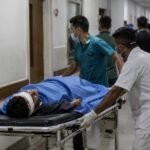
The six bodies were found and the reactions were the same as everyone who had any knowledge of Manipur could have anticipated outrage, protests, rioting outside JNIMS hospital in Imphal and demands for resignation of husband of Deputy Chief Minister Nemcha Kipgen, who was suspected of having ties with the Kuki militant outfit responsible for the abductions. The Naga groups have now called for the cancellation of the Suspension of Operations agreement with the Kuki militants and the KNF-P’s listing as a terrorist group, says Republic World. Delhi has lost all control over the situation when citizens have to ask the state to declare armed groups as a terrorist group that the state has a ceasefire with.
It’s time to be realistic about the timeframe, but the Modi government would like you to forget. The President’s Rule was imposed in February 2025 two years after the violence started, when the government of N. Biren Singh was brought to an end by its own shortcomings. It was marketed as a fresh start for the Centre, and a direct opportunity to take charge. Amnesty International’s appraisal of the previous months is condemnatory President’s Rule was scrapped in February 2026, a new BJP Chief Minister was appointed and “the change in leadership did little to mitigate the violence and insecurity under the new government”. It was as though Amit Shah’s own ministry was in control, and as the killing continued, it did not slow down.
In more than three years, what has been achieved by the BJP-led Centre? Over 6,000 weapons have been stolen from state armouries in May 2023, of which more than half are still in the possession of civilians and militants. The political is a stage act: ceremonial swearing-in of ministers, pouring comparisons of “Viksit Bharat 2047” and Manipur’s status as “bridge to the Global South”, bodies are hauled in parts from riverbeds. The construction of border fences continues to progress along Myanmar’s border, while the formal dialogue process for Kuki and Meitei groups does not. A Centre which can raise troops and declare infrastructure from a dime, apparently can’t raise the will to sit communities at a table. That isn’t incapacity. That is a body count body choice.
“Each cycle is a terrifying cycle that involves an abduction, a ceasefire violation, the bodies being found, a round of outrage, a pledge of “stringent action” and then nothing. Chief Minister Y. “
Khemchand Singh’s pledge that the state was going to be a “mute spectator” in this regard, which had been the case for three years since then, seems to have fallen on deaf ears in the face of the ongoing governance mess. Highways are still blocked by the Kuki and Naga communities, which are cutting off provisions to a starving people. Relief camps which were supposed to be temporary have become permanent homes for 174 of the 2,12,000 people who have lost their homes and places of worship, and their faith in the Indian state’s protection.
Three years. Two Chief Ministers. One term of President’s Rule. Over 260 dead. On June 11, 2026, two more names Kuki church leaders were killed a day after six Naga civilians were pulled from the ground in pieces. If “direct central intervention” under Narendra Modi’s government means this, then Manipur doesn’t need any more of it. It requires the Centre to cease acting like optics ministries, and begin to take responsibility for this crisis.