
Manipur’s long-standing ethnic strife has quite a bit highlighted the precarious situation of Christian pastors, who at times have not only become figurative but also actual victims of communal violence. Although the region’s unrest took a steep turn with the 2023 Meitei-Kuki conflicts, church leaders still got threats intimidation killing, and displacement even before the present turmoil as per the reports and documented cases.
In Manipur, the pastors mainly the ones coming from the Kuki-Zo and other tribal Christian communities, have always been caught in a very delicate situation because of the conflict in the hill districts. In fact, it was during the insurgency and ethnic strife in 1990s and 2000s that church pastors were regularly among the ones who had to negotiate with the militants and the villagers, thereby becoming vulnerable to revenge. Not only were the churches set on fire or wrecked time and again during the violent situations, but the pastors were also frequently compelled to run away from their homes following threats. Sources describe the persecution of Christians in the region on the systematic violence, forced eviction, and bombing of church services, mainly those in the hill villages where there was almost no government presence for a long time.
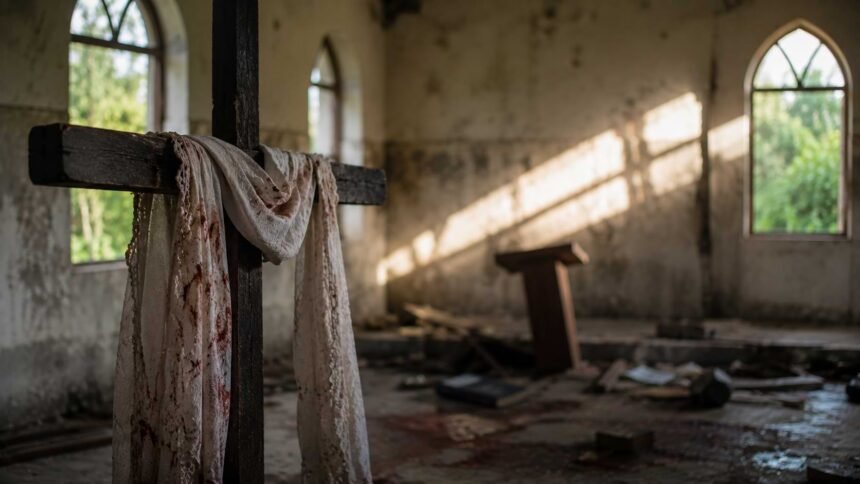
Since May 2023, the emergency has become a lot more serious. In fact, a large-scale ethnic conflict erupted in Manipur that led to more than 250 deaths and tens of thousands of displaced persons. The churches were hit hard: hundreds of them were either burnt or damaged during the first few days of the turmoil, and many pastors had to either give up their ministry or move to relief camps. Sometimes, even the clergy were the ones providing support to the displaced persons and at the same time, they were the victims of the violent acts as the religious affiliations were misunderstood as ethnic divisions.
In the years after that, there were still occasional violent episodes. As the information from humanitarian and church watching groups, pastors were ambushed, threatened, and even murdered on occasions while traveling between villages or at church-related meetings. The fear for the safety of religious leaders grew as the armed groups known to be involved in cross-ethnic confrontations increased their presence in the hill districts.
In fact, this pattern sets the context for another tragic incident which was raised very strongly by almost all the people in a meeting in May 2026 when three pastors were killed in an armed ambush in Manipur’s Kangpokpi district as they were returning from a peace and reconciliation gathering. From various reports, the three victims were traveling in a convoy when suddenly the gunmen opened fire, killing three pastors and injuring several others. The tragedy which followed was a cause of great worry from the churches and other groups who called it a planned attack on the religious leaders and the efforts of peacebuilding.
Altogether, these incidents depict a grim persistence: pastors in Manipur have suffered attacks over and over again not only for being part of a religious minority but also for being community leaders who operate in the midst of ethnic and political tensions. The threats faced by Christian pastors have been on-going from the time of insurgency and church destructions up to now when the killings are being made through ambushes. In fact, the level of danger to their lives has even gone up lately.
Currently, as Manipur is grappling with mistrust and intermittent violence, the killing of pastors brings to light not only how the conflict has deeply affected the locality but also the havoc it has wreaked on the sanctuary, mediation, and moral authority that pastually were reserved for the Church.