
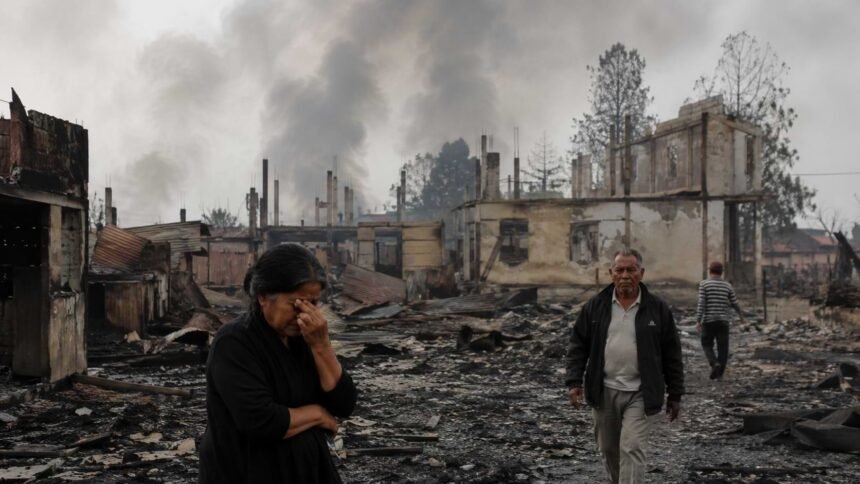
More than two years have passed since Manipur became an abyss of living hell. Over 260 have lost their lives since May 3, 2023, over 60,000 have been displaced, nearly 400 churches have been destroyed by fire, women were paraded naked on the streets, with the cameras rolling and the state police looking on. For almost the whole of those two years, the man who rules India with an iron fist, Narendra Modi, said nothing, did nothing and visited not once. This is not a governance issue. It’s a moral disaster cloaked in political convenience.
It was not a spontaneous uprising by the Meitei community in the Imphal Valley, who are mostly Hindu, against the Kuki-Zo people, who are mostly Christian, living in the hills. As expected after years of “engineered grievance.No surprise after years of “engineered grievance”. The broad implication of a Manipur High Court judgment that was favourable for the Meitei appeared to have set the stage for the dominant community to be able to make claims on tribal areas for land acquisition and the allocation of government jobs that had been reserved for STs. The fuse had been wired. It all needed was a spark. It was not a riot that ensued. It was a pogrom.
The state had broken apart under the leadership of a man who had ended the peace accord with Kuki militant groups a mere two months prior to the violence, Chief Minister N Biren Singh, a Meitei, who believes he was a BJP loyalist. His government was not a go-between in the middle. A harsh investigatory report revealed that the police of Manipur itself led two Kuki-Zo women to a crowd of 1000 people who stripped them off, sexually molested and paraded. The crime was not reported in the media for over two months, until a video of the crime went viral in July 2023 due to an internet shutdown imposed by the State. When Modi finally spoke, what was his reaction? He called it “sad.” Sad. As if it were a natural disaster, and not a state sanctioned attack on women.
Bureaucracy is not enough to wash away the role of Hindutva ideology in this conflict. Human Rights Watch reported that Meitei militant groups, such as the armed group Arambai Tenggol, terrorized Kuki-Zo homes, businesses, and places of worship, nearly without any penalty. In the interim, police were reported to have have cut short the filing of FIRs and withdrawal of complaints from the National Human Rights Commission. It’s not the police. This is institutional collusion. The BJP government in the capital of the country, New Delhi, which holds direct control over the central para-military personnel opted to send troops along buffer lines instead of arresting mobs that were setting fire to the lives of a whole community.
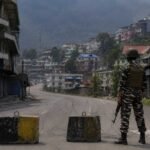
But the arms problem that has become the defining feature of the war is just as astounding. Ethnic militias are well armed, thanks to thousands of weapons seized from police armouries and smuggled across the porous 400-kilometre border with Myanmar. The use of drones against villages in September 2024 was carried out by drones, which were previously exclusive to nation-states. Mortar shells are now used as missiles for civilians. A state of 3.7 million people has effectively become divided into two ‘armed territories’ – one in Meitei valleys and the other in Kuki hills – with buffer zones of security forces and mutual hatred between the groups.
This crisis India’s Prime Minister was missing, not only physically but also morally for most of the time. The state of Manipur had not been visited by Modi for more than two years from the incidences of the violence.More than two years since the incidents of the violence, Modi had not visited Manipur. He was called upon for silence several times in Parliament by the opposition parties. They were asking him to come to the state, meet the displaced people and demonstrate simple affairs of humanity with people in relief camps. He refused. The northeast region of the country was under his control from the press conferences and campaigning rallies held in other parts of the country. Modi did not even step into Manipur till September 2025, more than two years after, when he laid the groundwork for infrastructure projects and stated that “violence” was “unfortunate. Infrastructure projects. What’s the use of a road overpass to fill mass graves of an ethnic crisis his own party’s politics helped spark?
The way the Centre has handled or rather not handled the Manipur issue highlights the chill electoral logic that this government has. The number of Lok Sabha seats that Manipur gets is not sufficient enough to be called as a genuine political risk for Manipur. The Kuki-Zo are not a core BJP constituency; most of the community is Christian. The Hindu dominated valley residents, known as the Meitei, are. There was never a neutral approach. Selective protection was. In New Delhi, a three-member inquiry commission was appointed, which has received more than 11,000 complaints by May 2024, but has yielded no tangible consequences in terms of accountability. Biren Singh, whose own Supreme Court in India termed his government as “absolute breakdown of law and order”, was unable to get out of his chair till early 2025, when President’s Rule was finally imposed.
Two years after the fires, displacements, rape, drone warfare and inter-communal hatred, the best the Modi government could offer was the language of peace committees, development projects. Not justice. Not accountability. None of the senior BJP officials responsible for the environment that allowed this to occur holding any accountability. When a government prefers to be loyal to a political party over a constitutional responsibility, when it is ignoring the assaults of women in public places and refers to them as “sad,” when it sends its Prime Minister to a burning state only when the optics become too strong to not see that the government has lost the right to claim to be the custodian of a democracy.
People are burning in Manipur.Burning continues in Manipur. Not only in the material, but the material arson never ceased, it was just that it was salted instead of healed. Accountability for those who lit this fire, a return to homes that still stand, a return of the rule of law, as a reality – without that there is little peace in Manipur, for the last two years, peace has been elusive, it’s performative, it’s cruelly out of reach.