

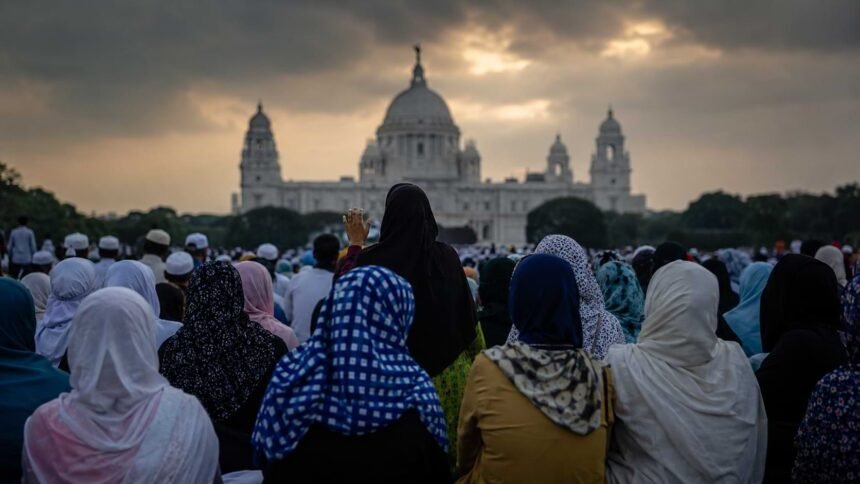
The history of West Bengal is one of resilience: refugees from Partition and people willing to endure and rebuild their lives. For decades, the almost 27% of the demographic the Muslim community of Bengal, inhabited the dense layers of the social and cultural infrastructure of the state. But in 2019, when the ruling Narendra Modi party accelerated the implementation of the Citizenship Amendment Act (CAA) and simultaneously tested the waters for the National Register of Citizens (NRC), the shifts in Bengal’s social and cultural fabric began to occur. At this point, it became fear of the state, not the community, and it came literally, overnight, in the form of law.
The CAA: A Law That Excluded by Design
The Citizenship Amendment Act (CAA) focused on changing Indian citizenship laws for religious minorities fleeing persecution in neighboring countries. On paper, it was cast in a humanitarian manner. However, in a border state such as West Bengal, where the CAA was designed to appeal to a constituency through a 2,216-km border with Bangladesh, the exclusion of Muslims was particularly blatant. The laws raised a visceral and existential concern for the region’s Bengali Muslims. The CAA was not designed to include, but to exclude, in combination with the National Register of Citizens (NRC). The CAA raised the fear of ‘us’ versus ‘them.’ The ‘us’ became the local Hindu population and the ‘them’ became the outlawed Muslims. The Wire reported, pointed out the law that was designed to be exclusionary. That was the combination of the CAA and the NRC.
The NRC Shadow: Ghosts of Assam Haunt Bengal
By the time the NRC exercise in Assam was completed in 2019, about 1.9 million people, mostly Hindus, a sizable number of Muslims, and mostly from the Bengali-speaking population, discovered, for better or for worse, that their names were no longer on the citizens’ list. The exclusion of generations of residents, either inadvertently or purposely, who had no documents to substantiate their lineage, created an uproar in West Bengal. As a response, farmers in Murshidabad and daily laborers in North Dinajpur, in addition to weavers in Malda, were racing to produce documents such as birth certificates, land records, and school certificates. The then Union Home Minister, Amit Shah, later decided in Parliament that the CAA would be enforced and simultaneously a nationwide NRC would be undertaken. This was no longer about the CAA and NRC as concepts. This was political messaging and shifting discourse on Bengal’s Muslims. As The Hindu documented, Shah had steadfastly claimed “infiltrators” would be found and ousted, which in Bengal meant something specific.
On the Streets of Bengal: Protests, Tears, and Resistance
The reaction from Bengal was immediate, and it went down in history. From the Park Circus Maidan in Kolkata, where thousands of Muslim women bodily defied for weeks, echoes were heard from Howrah’s narrow alleys and the northern tea gardens. This was a reaction from emotionally involved people, not a politically organized march. They were the people who were emotionally hurt from feeling like outsiders in the part of the country where they were born. CM Mamata Banerjee’s opposition to the law’s enforcement in Bengal was strengthened by her economic indicators suggesting that the state was unwilling to conduct any NRC. This was Mamata’s pushback presenting the BJP with the claim about their attempts to ethnically and religiously segregate Bengal, but proclaiming that judiciary positions were not safe in Bengal. As Scroll.in captured, the protests in Bengal were among the longest sustained protests in the country.
Targeting a Community: Data, Detention, and Displacement
The human cost of the fear of the CAA-NRC scheme went beyond the protests. There was a spike in the number of people who were selling their properties in order to buy documents. There were elderly people, some of whom were landless, and others of whom were even illiterate, who were not able to produce documents that they did not had in the first place. The mental cost of the persistent and deliberate threat of being made stateless, and the desire of confirmed statelessness, is very difficult to calculate. There were massive surges in reports of stress from the fear of statelessness, and of suicides, in some of the regions that were in the Muslim-majority population, especially Nadia, Birbhum, and South 24 Parganas. The fear was not imaginary, and it was the complete redesign of the legislative order. Amnesty International noted, CAA in conjunction with the promulgation of the legislative order to establish detention camps was deliberate, state violence that was to be used, was against a community, that the state had used the full resources of the state against.
Bengal’s Verdict: A Democracy’s Answer to Fear
2021 was West Bengal’s turn to speak on the issue via the ballot box. BJP’s campaign, promising Hindu refugee citizenship under the CAA, was not enough win over the state that had witnessed its Muslim communities under sustained fear for two years. In West Bengal, the Trinamool Congress returned to power leading to a wide understanding of this outcome to be the rejection of politics of Identity. Bengal spoke for not only its Muslim community but to the Identity that no exclusionary policy can remove. Still, the CAA and NRC are ghostly lingering. The law is still in the state of the code. The BJP reiterated pursuing its implementation after the law’s rules were notified in 2024. The Center’s silence to Bengal’s demographic concerns is itself is a message. The Indian Express reported, direct result of the law’s notification prior to the 2024 elections. The CAA was never a law in the name of practice of humanitarianism. It was, and still, a politically driven and crafted instrument
Conclusion: Fear Is Not Policy — It Is a Choice
The effect of the CAA-NRC combination on West Bengal’s minorities was more than situational. It was purposeful to redefine belonging in a multi-ethnic democracy. Legislation that leaves millions in doubt about their citizenship is not a governance tool, it’s a psychological weapon meant to intimidate. West Bengal, because of its historical memory of the Partition, is more sensitive to this than perhaps any other Indian state. People of Bengal, both Hindu and Muslim, have understood exclusion to be the antithesis of democracy. Possibly the most significant tale this state has for the rest of India is the struggle against exclusion, which is so peaceful, so persistent, and which so profoundly Bengali in its magnitude.