
Initially, the BJP’s victory in West Bengal in 2026 was hailed as a major step in the democratic process. But, what’s really happened is see the worse side of violence, division, and growing fear among minority communities, In particular Muslims.
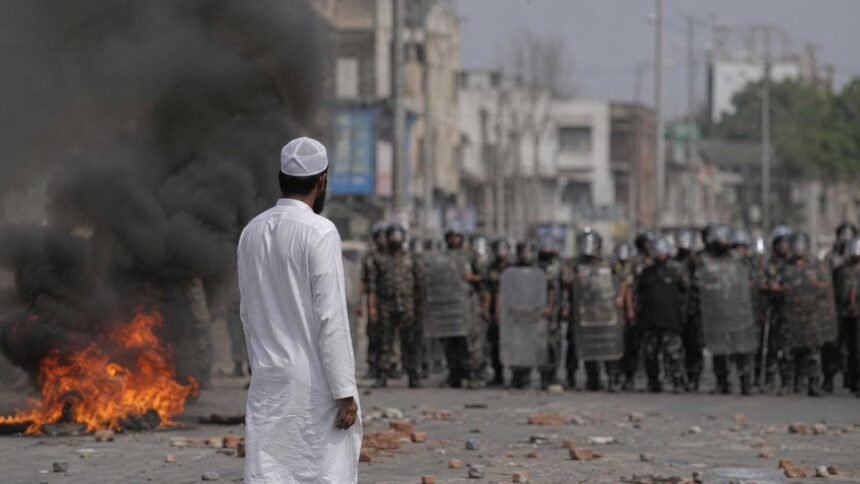
Right after the results, the state was thrown into disorder. Different sources say that at least three people lost their lives, hundreds were taken into custody, and more than 200 criminal cases have been registered in the days right after the elections. These are not simply numbers but they represent a highly explosive situation breaking out where political success has resulted in confrontations on the streets.
A Climate of Violence, Not Stability
Post-election violence in Bengal has occurred at different times. The scale and the context of the violence are what concern this time. The 2026 elections were already tainted with accusations of voter suppression, electoral manipulation, and the disenfranchisement of millions, Mainly those belonging to minority communities. Such a disputed mandate that is accompanied by massive unrest could mean that the problems of legitimacy and governance have been severely questioned.
Moreover, violence is not the sole aspect of the story political players from all the sides accuse each other. That said, what gets noticed is the structural exposure of the minorities in such fiercely charged environments. BJP being the ideological force center of Hindutva politics, its rise has given the hyper-nationalist elements a license to act.
Hindutva Politics and Muslim Marginalization
The BJP’s poll victory in Bengal is just one example of a bigger nationwide event – the intensification of religious divisions. As political scientists, religion is increasingly influencing voting decisions, with most of the Hindu voters choosing BJP while Muslim voters mainly backing other parties.
This division based on religion does not remain limited to the voting booths. It goes into people’s everyday lives. For example, the BJP didn’t include any Muslim candidate during main settings, which strengthened the notion of being left out. Furthermore, the talk about “infiltrators” and changes in citizenship laws has led to a story that often shows the Muslim community as the one being suspected rather than the one being protected.
In such a setting, even the incidents which are rare like killings or destruction get the communal character, and such things scare the already vulnerable communities even more.
Vandalism Claims: Reality vs Propaganda
Social media is awash with claims that BJP supporters are attacking Muslim homes and shops on purpose. Yet, it is very critical to separate the truth from the lies.
Actually, many fact-checking bodies have uncovered that a lot of the widely shared videos showing Muslim people being attacked after the elections were either old, unrelated, or from totally different occasions. It does not imply that violence has not occurred – on the contrary – but it highlights a very dangerous practice: using misinformation as a tool for exacerbating communal tensions.
Strangely, this entire chain of false information propagation is exactly what frightens the Muslims, for they hardly understand the extent and immediacy of the threats.
Leadership Silence and Mixed Signals
The most worrying thing is not seeing a definite, steady reaction from the heads of the party. For instance, in BJP leaders’ press conferences, they have affirmed that any party worker found guilty of vandalism might be expelled, such assurances have hardly soothed the worries at ground level.
In ddition, not taking firm and public measures against the culprits might inadvertently convey a message that their actions are being condoned.
But, leaders from the opposition like Mamata Banerjee, have even described the result of the elections as the “murder of democracy” pointing out that regime was won through unfair means, violence, and fear. Such a political stalemate only aggravates the state of affairs in the state and its inhabitants. Mostly those belonging to the minority community become the victims of the situation.”
A Pattern Beyond Bengal
Bengal’s situation cannot be seen as an isolated one. It is all over India that voices are raised to warn about the shrinking room for minorities as the political atmosphere keeps highlighting majoritarian identity more and more. Starting with the contentious citizenship laws and going on to the issues of religious freedoms, the overall direction points to a systemic change and not just a few spot incidents.
Bengal is seeing this change coming to its streets – not in a peaceful way, but with riots, fear, and a lot of not knowing what will happen next.
The Real Crisis: Trust Deficit
The fundamental issue behind West Bengal’s crisis is more than just violence, it’s a matter of trust.
- The credibility of elections is being questioned due to alleged tampering of voter lists.
- The administration’s inability to stop post-election violence is seen as a sign of weakening governance.
- Neighbouring communities’ faith in each other is being broken due to divisive propaganda and polarization.
For Muslims in Bengal, this means a living experience of not feeling safe irrespective of the accuracy of each viral claim. Feeling exposed is, in fact, a very strong and dangerous factor.
Conclusion: Democracy at a Crossroads
The Bharatiya Janata Party’s win in West Bengal was intended to be a symbol of democratic change. Ironically, it has revealed the weak side of India’s electoral politics – where a victory can quickly turn into a state of unrest.
Violence, polarization and misinformation have together contributed to the situation where minorities feel more and more insecure, and democratic institutions are seen as contested.
Bengal faces a risk of not becoming a showcase of political transformation but a case of democracy, when mixed with majoritarianism and unchecked power, leading to deepening divisions instead of healing them, if the current trend goes on without any intervention.
The BJP-led administration’s biggest challenge isn’t its electoral mandate but its ability to restore law and order, provide justice, and gain trust of different communities.
Because if that doesn’t happen, winning in the elections will still be the less significant side of the story compared to the disorder in the streets.