
When the Votes Are Cast, the Fear Begins
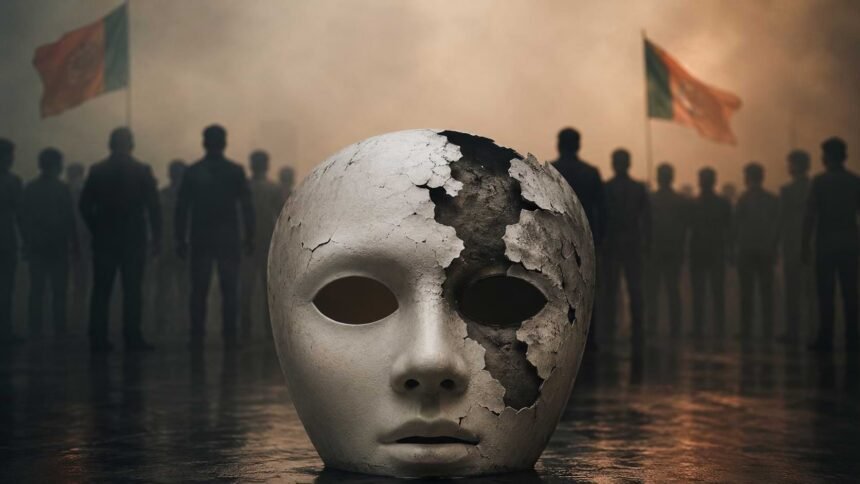
All the elections in West Bengal does not conclude with any joy but with fear. The ballot box has not come to an end of the political process for ordinary voters, particularly those who dared to oppose the Trinamool Congress (TMC) government. It is a beginning of retribution often. In districts like Murshidabad, Cooch Behar and North 24 Parganas, allegations of post-poll violence are frequent after every major electoral cycle .Houses are torched. Opposition workers beaten. Women are harassed. Even the state apparatus, meant to ensure protection of citizens, turns a blind eye. In this part of India democracy has a strange penchant for wearing a mask.
The Shadow of the Centre: Modi’s BJP and the Political Game
This would be easy to mark a ‘Bengal issue’, a ‘banerjee failure’, a ‘TMC pathology.There’s a more complicated mask of democracy, however. The BJP headed by Prime Minister Narendra Modi hasn’t been a silent bystander. The BJP has been actively playing the communal game in Bengal since the 2021 assembly elections, using polarising language on and Hindu identity as an election ploy. The deployment of the Central agencies CBI, ED and Income Tax department is being called politically motivated as opposed to legally based. If the Centre resorts to federal instruments against a state government, and the state government acts in a way of protecting itself, then it is the citizens who are left with nothing to turn to. The mask is elasticized on both sides.
A Mask on Justice: How Accountability Disappeared
Democracy’s mask is starkest in the functioning or dysfunctioning of justice in Bengal. The National Human Rights Commission (NHRC) had presented a scathing report to the Supreme Court on the incidence of various atrocities that were committed after the 2021 elections. However, there was never a real accountability. There had been a slow pace of prosecution and cases had not been taken up by the CBI, which was directed to investigate by the Calcutta High Court, and the victims continued to be exposed and vulnerable. In fact, According to the NHRC’s own findings, , the NHRC itself determined that women experienced sexual violence, families were displaced and property was destroyed, in what was a systematic campaign of political intimidation. But if law is an instrument of the strong, not the weak, then democracy does not die in one dramatic event. It is taken away, quietly and cruelly, disguised as ‘Business as Usual’.
Voices That Won’t Be Silenced: Civil Society Pushes Back
Beneath that mask, something remains awesome. Some regions of Bengal boast of a massive legacy with traditional civic resistance. Bengal intellectuals, journalists, and the common masses have built legacy and refusal of acceptance on the grounds of resistance that ‘fear must remain with the permanent’. Selective media aids and abets, persistent NGOs and student groups, have kept documenting the misery and abuse, and have made demands for accountability. The journalists who visit the riot-affected areas, the active members of the legal fraternity who are issuing PILs under glaring threats, the teachers who visit the legal realm and voice their concerns, these individuals, despite facing violence, are Bengal’s defiant, alive masses. Civil Society remains alive and active even in the cracking realm of State and their defiance of highly noticeable Central Overreach is the alive essence of Bengal. And still today, the mask is not losing its essence, for there are still people who care enough to look. The Civil society’s resilience remains highly unnoticed in realms of Indian politics. Bengal’s democratic spirit is democratic, Civil Society morbidly remains alive. ‘Bengal must, Civil Society morbidly alive be. ‘Bengal must.
Taking Off the Mask: What Democracy in Bengal Actually Needs
Neither the TMC nor the BJP provide the establishment’s true structural integrity that Bengal needs to unmask. There needs to be structural insulation done to the state’s police from being politically directed. The Election Commission must rigidly implement the codes beyond the days of the polling to the weeks to come. The judiciary must regain control of the central agencies from the political the political arena. The unaccountability of the system of not being held liable for the party sponsored violence must end. This politically directed violence must not only be stopped, but violence should not even consciously or unconsciously be sponsored at party state sponsored violence. This is needed at the current context. So there is a need to not only be legally but also be politically free. Bengal is not even remotely lacking in that. It is not even worthy of the system built to unmask the system. Until the current context changes, the system will unmask and the fear that comes with the act of courage will remain. The courage to unmask the system will prevail.