
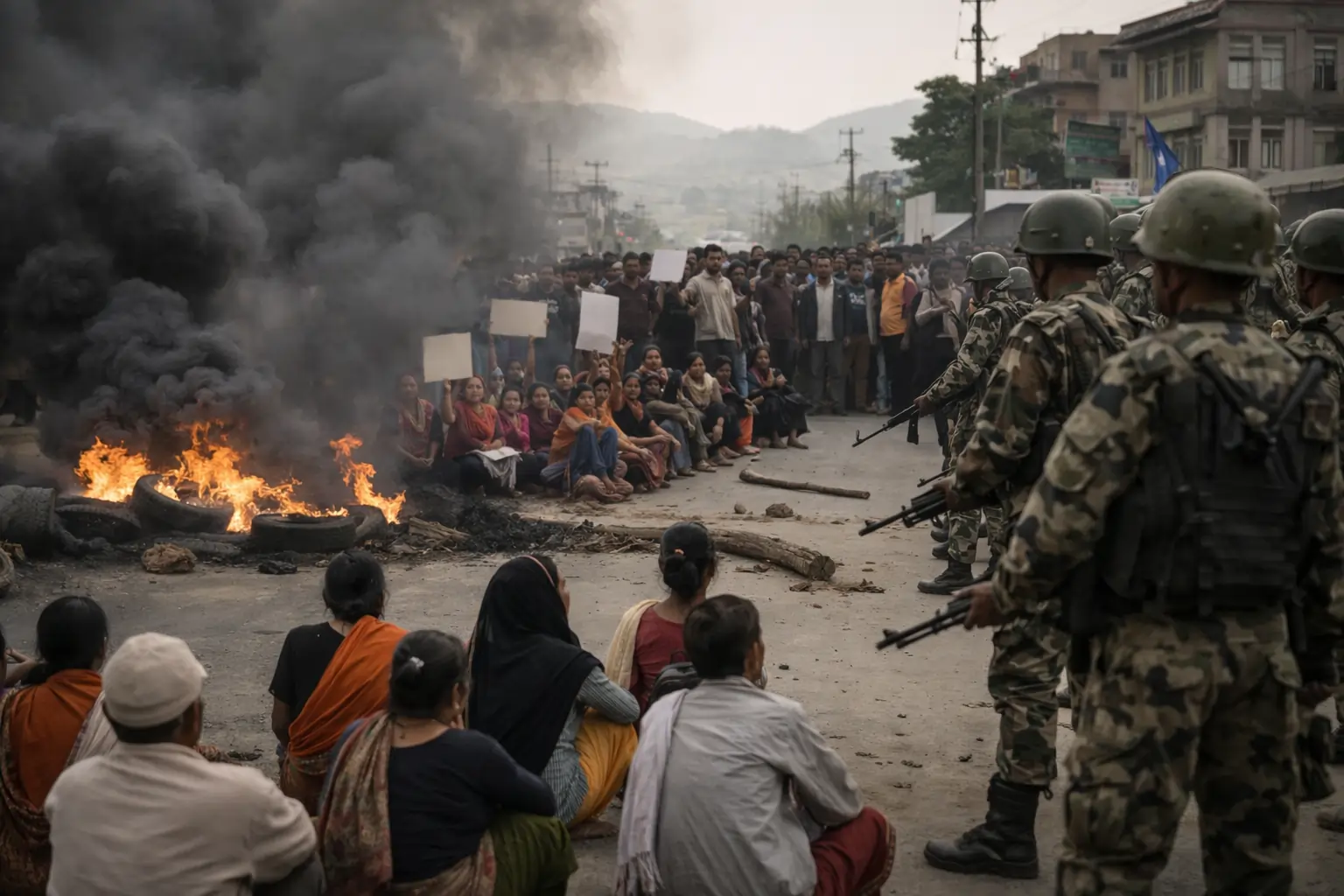
Fresh protests in Manipur are a stark reminder of the deep mistrust and insecurity that have always been the major features of this conflict-hit state. Protesters blocked the roads in some parts of Imphal West and Imphal East districts as they opposed the relocation of members of the United National Liberation Front (Pambei faction), popularly known as UNLF-MPA. The protests started after an internal order was made on April 13 directing cadres in village camps to come back to specified locations by April 15. The steps complement the overall peace pact between the group and the government but the changes have met with strong resistance at the grassroots level.
Fear of Security Vacuum Makes People Resist the Idea
In towns like Phayeng and Nongsum, the locals have expressed their worries about their safety if the decision is implemented. These areas are located near the boundaries of conflict zones, especially close to the areas inhabited by the Kuki communities, where ethnic hostilities have been escalating for the last one and a half years. To the majority of the locals, UNLF-MPA members are not only a symbol but also a reality. They argue that the group has been the one that scared the potential attackers away, thereby allowing the community to maintain a minimum level of security despite new crises breaking out almost every day.
The local resistance is fueled by the fear of security vacuum. In some villages such as Phayeng and Nongsum, the local people have become worried about their lives. These villages are located in the proximity of ethnic conflict areas where the Kukis inhabit, and therefore there has been an increasing trend of ethnic tension in the last two years.
To most of the locals, UNLF-MPA is more than just a name on paper. They say that the group has been a big factor in preventing attacks, in fact, it has become a symbol of peace and stability. So, the idea of moving them away without any alternative to replace them is really scaring people. Resistance here shows a key thing: in places of conflict, sometimes non-state actors are the ones who cover the security vacuum of state institutions. When communities get used to these groups for their protection, taking them away without giving something else can lead to more fear than comfort.
Peace Accord and Actual Situation
The relocation order is a provision of the peace agreement signed by the Pambei-led faction of the United National Liberation Front, Government of India, and state authorities. The agreement stated that the cadres would be first settled in the designated camps, after which their disarmament and reintegration would be pursued as a long-term program. However, recent incidents are revealing the discrepancies between the government’s policies and the real situation. A major objective of the agreement is to bring about peace in the region and to cut down the number of armed groups, but the locals apparently have no confidence that the state will be able to ensure their security even in the absence of these cadres. Demonstrators asking that the present camps be enhanced to the level of official facilities are only worsening the situation. It seems that instead of aiding the process of demilitarization, some communities are supporting the armed presence as a matter of course.
Lack of Faith in State Security Forces
One of the main reasons for the protests is perceived failure of central and state security forces to offer adequate protection. The protesters have indirectly indicated that they do not have faith in the security forces through their demonstrations. Their voice has been that the security forces have either failed them or been very late in the past times of violence.
Under such circumstances, it is quite reasonable that the locals have to rely on their own armed groups, but one should also remember that this is a very serious legal and ethical dilemma. On one hand, the state endeavors to reclaim its authority and diminish the insurgent groups’ influence but on the other hand, its inability to ensure security to the point that it discredits its own efforts.
Ethnic Fault Lines and Local Vulnerabilities
The protests have turned into a reflection of the deeper ethnic dis e Manipur. The clashes btween two communities where government sided the one is now differecult to resolve but neglect has intensified it as well. Distant places such as Phayeng and Nongsum villages are the ones who suffer the most in this crossfire. In addition to be isolated from other parts, they also have limited government presence. So, security, in a case like this, is more than just police work; it’s about surviving. The residents’ fear is based on previous experience. For them, the exit of UNLF-MPA members is not a theoretical policy change but a possible cause of violence.
Government’s Position and the Neglected Solution
Among other state officials, even the Home Minister has stated that removing some camps is a step towards implementing the peace agreement and bringing about the return of a normal state of affairs. The work of such measures can only bear fruit if the authorities manage to gain the confidence of the local population first. Unless the people believe that they will be safe, any effort to move or dismantle the armed groups without their consent is bound to lead to resistance.
Protests in Manipur, in many ways, are symbolic of the bigger question unresolved in conflict formula: no peace can be achieved without the people putting their faith in it. Just moving out the United National Liberation Front cadres, as part of the peace building process, may in fact destabilize the area for a short period if not managed carefully. In a way, this whole issue points to the fact that security means not merely the removal of soldiers but the establishment of the institutions that the citizens will rely on. Without trust, even those schemes which are aimed at peace and have all good intentions may find it difficult to grow.