
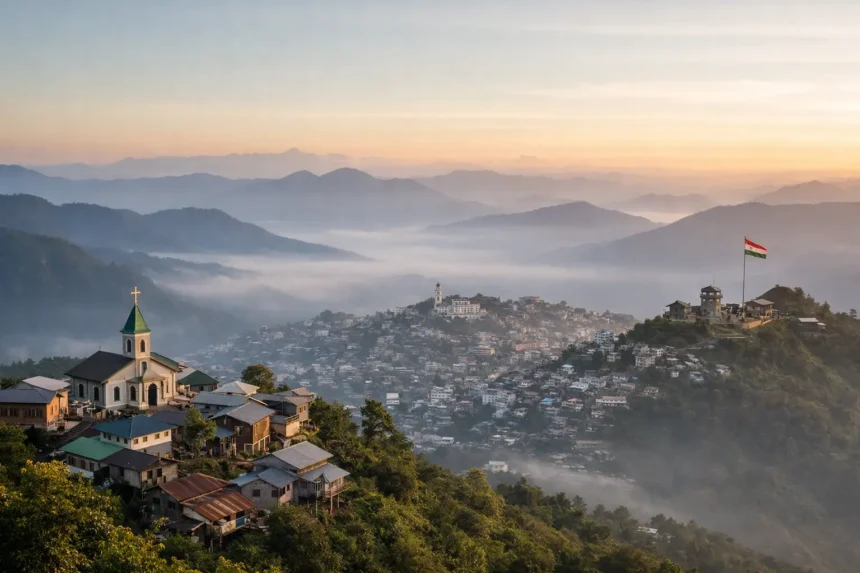
Mizoram remains calm amid Northeast India’s chaos – peaceful, united, and steady in its democracy But nationally? It’s overlooked. The BJP didn’t fix old flaws, it kept them alive. Political weight still flows elsewhere Stability isn’t power. There’s a quiet shift in how votes are counted, and it doesn’t include Mizoram. Their voices fade after every election.
Mizoram’s peace isn’t forced – it grew from inside. It seems the region’s roots built stability without outside hands. Since 1986, fighting stayed far away. Neighbors like Manipur still burn with unrest. Votes roll out smoothly, often hitting over 80%. People show up regularly. That says something about trust. And elections stay calm even when others fall apart. (The Times of India)
Structural Marginalization and Electoral Irrelevance
Mizoram still feels left out politically, even with progress. At least in theory, its tiny electorate – just under a million, makes national politics overlook it. One seat in parliament doesn’t mean much on the map. Central funds rarely flow through here Infrastructure lags behind. Policies don’t prioritize this region often. The state struggles to connect with bigger systems.
BJP’s Ideological Limits in Mizoram
After years of pushing its message, the BJP still fails in mizoram. The party’s attempts to spread its views there keep hitting walls. Mizoram is solidly Christian – over 85% of people follow that faith – and its culture runs deep. That makes the BJP’s majoritarian story feel foreign Voters ignored the campaign. In 2023, they gave the BJP just 5.05% of their votes and only two seats out of forty. (Wikipedia)
Regional powers took control of politics. The Zoram People’s Movement won 26 to 27 seats – more than any other group. (The Times of India) That wasn’t just another election win. It signaled outright resistance to national parties. So the BJP tried hard to grow its reach. But voters rejected that push. They chose local voices instead.
Backdoor Politics vs Democratic Engagement
Thing is, the BJP’s small footprint hasn’t stopped them from pushing behind closed doors. It seems they’ve quietly backed regional rivals in 2023, allegedly to keep control without making noise. Hard to ignore how these moves suggest hidden influence over election outcomes. (The Times of India) Even as no official proof exists, the pattern points toward favoring power over fairness. This doesn’t feel like real democracy, it looks more like strategy disguised as support.
Centralization vs Community Governance
Mizoram’s growth didn’t come from top-down policies. It sprang from local leaders, village groups, and shared values. Central plans rarely matched ground realities. The BJP’s push for uniform control does not fit here. People solved problems together – education, peace, community trust – all without waiting for federal grants. But rural housing efforts stalled despite promises. Many families still lack the homes they were told would arrive.(The Times of India) The BJP’s growth story often falls flat in areas needing local flavor and hands-on choices, In particular where traditions shape daily life (and people don’t always follow scripts).
Geopolitical Importance, Policy Neglect
Mizoram’s border posts face constant pressure from Myanmar and bangladesh. Its position makes it hard to ignore. New Delhi tends to react instead of planning ahead. When Chin refugees poured in, Mizoram stepped up fast, rooted in community ties Central policies stayed stiff. That gap shows how far local needs drift from official plans.
Regional Politics vs Majoritarian Nationalism
Mobilizing voters – ZPM pushes identity, governance, anti-corruption – has disrupted BJP’s nationalist myth. The party fails to adjust when regional needs differ. There’s no one-size-fits-all plan here. It doesn’t work across states like Mizoram. They resist top-down messaging. Political life changes where local voices rise. This shift shows real-world limits to central control.
Conclusion: Stability Ignored, Voice Underrepresented
Mizoram’s quiet peace isn’t luck – it’s a choice. People live without noise, without fights, and still manage daily life with calm. That stillness doesn’t mean they’re invisible. Their votes count less on national mapsit makes them hard to push for change Geography alone? No. Demographics? Not really. The real problem is how politics works here – how leaders see power as numbers, not people. And the BJP didn’t win because it failed at policy, but because it saw Mizoram as different. A place where trust grows slowly, where elders speak before politicians step in. Instead of listening, the party tried to shape things from outside. In a country that claims federal fairness, this isn’t right. States like Mizoram prove what stable society can look like, peaceful schools, open villages, community decisions made together. These aren’t just facts – they’re examples others can follow. Yet national leaders keep treating such places as background notes, not lessons. They ignore what happens when politics serves people instead of power plays. So why does India forget these stories?