
The political fervor West Bengal has been known for is intact but in recent years, elections in the state have become more like a battlefield than a democratic game. Bengal electoral politics has now become a space of violence, intimidation, propaganda wars and allegations of manipulation. But what makes the situation more perilous now is not only that opposition from the various political groups is deeply entrenched in this state but the aggressive rollout of the BJP’s national political apparatus in the state as well.
The BJP came into Bengal promising change or Parivartan and good governance. However, critics say the party brought with it a poisonous form of politics, characterized by communal polarization, media manipulation and the centralization of power. Instead of decreasing violence, the political climate was more polarizing, more confrontational and more charged than ever.
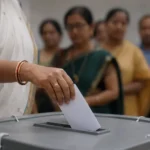
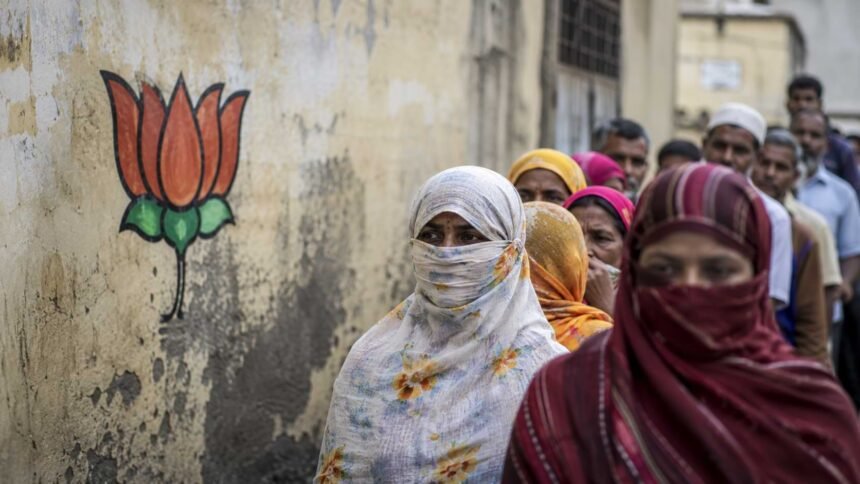
The figures speak for themselves in revealing the intensity of Bengal politics. In the Assembly election 2021, the voter turnout averaged 82.3%, with almost 6 crore voters turning up in 1,01,916 polling stations in the entire state of West Bengal, according to data of Election Commission. This was one of the most polluted voter turnouts in India, highlighting the seriousness with which Bengalis take their electoral politics. However, there was a disturbing reality of violence and fear behind the stunning numbers.
According to the Armed Conflict Location and Event Data Project (ACLED), cited in India Today, Bengal registered the highest number of 35% election-related violence events in India while 51% of election-related deaths occurred since 2020. According to reports, there were about 300 violence-related incidents and 58 deaths reported during the 2021 Assembly election – the bloodiest in recent Indian history.
This violence was not a spontaneous outburst of senseless and violent behavior. Such political conflicts have been a part of Bengal since the Left Front days up to the Trinamool Congress regime. But the BJP’s surge in power turned the conflict into a totally different game. Previous incidents of political violence in Bengal had a lot to do with the infighting of the political parties and territorial struggle. Religion and nationalism are forcefully brought into the picture these days.
The BJP has been pursuing communal polarization tactics in Bengal. In recent years, the message of the political has been more around Hindu identity politics; rather than unemployment, inflation, healthcare, or farmer distress, it has been this message that has been consistently targeted. Muslims are often treated as a threat to the people by the Muslim community and the BJP is seen as the ‘protector’ of the Hindu community.
This is a tactic that is being used by the BJP in some northern states. It’s easy: divide, dominate, and polarize the media and turn elections into identity issues rather than issues of governance. But in Bengal, this strategy clashed with a powerful sense of regional identity, which historically had opposed central control.
During the 2021 elections, Prime Minister Narendra Modi and the top leaders of the BJP campaigned massively in the state. Polling was spread across 8 phases, a very long process which many critics saw as politically motivated by the Election Commission. The critics pointed out that the drawn-out schedule was to the advantage of BJP as it allowed the party’s leaders more time to campaign and sharpen polarization.
Meanwhile, accusations of the misuse of central agencies grew in strength. Opposition parties have repeatedly alleged that the BJP-led central government had been politicizing institutions like the Enforcement Directorate (ED), Central Bureau of Investigation (CBI) and the Income Tax Department (ITD) against opposition leaders. Leaders who joined the BJP saw investigations start failing or cease to exist, further fueling the impression that institutions were being used politically.
The media too couldn’t have been more important. Many television channels played up BJP propaganda and presented Bengal as a lawless state. The issue was interpreted in the simplistic terms of “nationalism versus anti-nationalism.” The reporting was replaced by emotional TV coverage.
This media strategy was a very effective political strategy. Political fear-mongering puts pressure on the electorate. The constant exposure of citizens to tales of violence, communal threats and instability makes them more prone to being politically mobilized with emotional appeals than with rational policy discussions.
Meanwhile, voter intimidation allegations were met on the ground during the election phases. Clashes were reported from several constituencies, along with accusations of “booth capturing” or voter suppression by other political parties. Firstpost had reported that violence and booth jamming took place in Nandigram during the Mamata Banerjee-Sevendust Adhikari controversy between the TDP and BJP.
The anxiety about the elections in Bengal has become so common that for fear of intimidation after the polls, many migrant Bengalis are said to come home to vote. Violence is often discussed even in public spaces online, as a part of Bengal’s politics.
But the BJP’s contribution to this situation can’t be glossed over. The party’s campaign style is based on confrontation. Political opposition is not only criticized but also depicted as an enemy of the country or as an impediment to “New India.” People who criticize the BJP, activists, journalists, students who are against BJP are often branded as anti-national and appeasement politics.
This is a political branding which undermines democratic communication. Elections turn into identity and loyalty contests, rather than debates of ideas. Citizens are made to feel compelled to join political factions and dissenting from the establishment is regarded as treachery.
Controversy over reform of the voter lists has also led to increased mistrust in recent years. As per the report in 2026, lakhs of names were erased in the revision of electoral roles in Bengal, raising concerns on the extent and transparency of the deletions. During the Special Intensive Revision exercises, more than 90 lakh names were removed from the voter lists, according to some reports. Authorities said these deletions were made to remove duplicate or invalid records, but critics argued that the vulnerable and marginalized communities may be disproportionately impacted.
If votes are close, even small vote suppressions can have significant effects in determining the outcome. The number of voters that had been withdrawn in a few constituencies was said to be higher than the margins of previous election wins. This only adds to the suspicion in the already polarized political climate.
The sad thing is that humongous squabbling of the political parties for power and ordinary people suffer. The youth rate of unemployment is still high. Poor and middle-class families are still suffering from inflation. Farmers face uncertainty. The health care system is faced with difficulties in rural areas. But elections are increasingly being played based on show, religion and propaganda instead of substantive governance.
West Bengal today is not just a battle ground of state election. It is a symptom of the larger malady of Indian democracy. Neutrality of institutions is being lost. The independence of the media is declining. Speaking in political rants has become a more virulent exercise. The influence of psychological warfare versus public accountability is growing more in elections.
The critics of the BJP say this metamorphosis has not occurred by chance but is deliberate. Politically it is easier to control a divided society. Fear brings about dependence on strong leaders. Polarization brings the focus away from economic failures. And constant nationalism discourages dissent.
The life of democracy depends on the ability of citizens to criticize those in power without fear. However, in the absence of a free and open media and under pressure from institutions, and when governments manufacture narratives, democracy gradually evolves into a form of managed consent through identity politics.
The problem of violence in the electoral process in West Bengal therefore cannot be confined to a local or state-specific level. It’s a red flag for India. The debate has ceased on whether there are elections. The issue isn’t whether democracy will endure in a world where fear, propaganda, and political intimidation dictate what people do within the voting booth, but whether it will have any meaning.