
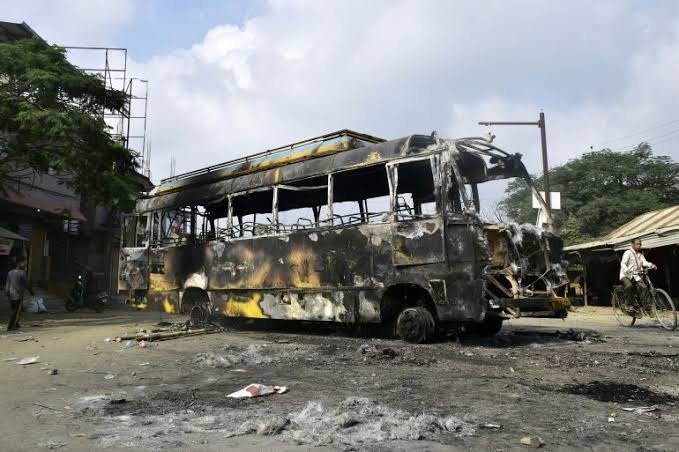
More than three years after ethnic violence erupted in Manipur in May 2023, the state remains a grim testament to the Modi government’s failure to restore peace or accountability. Over 300 people have been killed, dozens remain missing, and more than 60,000 continue to live in relief camps in squalid conditions. Fresh killings as recently as early November 2026 five dead in separate incidents involving Kuki and Naga groups show the crisis has not merely persisted but expanded from the original Meitei-Kuki divide into multi-front clashes across the hills.
Prime Minister Modi’s first visit came only in September 2025, nearly 28 months after the bloodshed began. President’s Rule in 2025 and the return of a BJP-led government in February 2026 produced neither lasting security nor reconciliation. Suspension of Operations agreements with Kuki groups expired without renewal, weapons looted from state armouries remain in circulation, and large protests in Imphal in late October demanded an end to what many call the Centre’s “proxy war.” Human Rights Watch and other observers have noted the inadequacy of measures under successive state administrations backed by the Centre, with renewed violence between Naga and Kuki-Zo communities adding to the toll.
The human cost is staggering: ethnic segregation of valley and hills, stalled justice for documented atrocities, and a generation growing up in camps. Development announcements and security deployments have not delivered normalcy. For a government that projects strength elsewhere, Manipur exposes a pattern of delayed engagement, political calculation, and an inability or unwillingness to confront the deeper failures of governance that allowed the violence to fester for years.