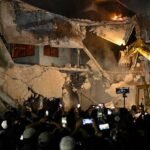

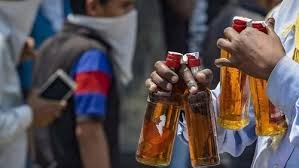
In Tuensang town and Chendang Saddle, nine people lost their lives on 10th and 11th September. The pattern was only discovered by police on 12th September when it was reported to them that similar deaths had occurred in the Civil Hospital. Most people were already in their coffins by that time and postmortems were rarely performed. This was not the first time. No one was paying attention.
Since then, the toll has been extended to 19 in Mokokchung and Tuensang, and a Special Investigation Team has been set up, while 19 people have been arrested. The state forensic laboratory didn’t have the necessary instrumentation to measure the amount of methanol seized liquor contained, but it did contain it. A state, which prides itself on policing alcohol, without allowing it to be sold, would not be able to measure the amount of poison that killed its own citizens.
The problem that is more fundamental is the law itself. The Nagaland Liquor Total Prohibition Act, 1989 prohibits the manufacture, sale and consumption of liquor, but illicit liquor is readily available. Police think there were numerous victims who purchased alcohol from the same outlet. Under the prohibition regime, the Excise Department even claimed Rs 22.51 crore in revenue from April 2021 to March 2026, something which government has never been able to explain.
Politically, the indications were there. In August 2024, the Cabinet of the State approved to review the Act, which could also see the prohibition being partially lifted. After two years, no results; only a statewide advisory to people to steer clear of liquor which is of “doubtful origin. The Congress has called for payment of ex-gratia to the families and the public disclosure of the lab results, and investigation into negligence or complicity on the part of the Excise Department and police. Even the long-time moral supporter of the Act, the Nagaland Baptist Church Council, is calling for an honest relook at the retention, amendment or cancellation of the Act.
If the Church, the opposition and the police ask hard questions, the government’s answer is silence. Nagaland requires a public inquiry report with accountability for enforcement failures, a lab testing facility for methanol and a timeline for enacting changes to the Act, if the death of a child happens in clusters, and methanol is suspected as the poison.
That which does not benefit anyone can be no morality. It’s a gift to bootleggers, who have to be paid for with the lives of the poor, such as Tuensang.