
The recent suggestion to rename Badarpur–the one of the oldest towns in the Barak Valley of Assam–as “Siddheshwar Dham, ” represent the latest installment of this history. Over the past decade renaming has became one of the most popular tools for governments and political actors to reframe and reinvent historic memory by changing names of cities, railway stations, roads and public institutions in India. While it is usually equated with attempts to regain cultural confidence or reassert civilizational assert its what implications such actions have of India’s history? Now for Northeast India, this question rings even more urgently.
For nowhere else are the complexities of many ethnicities languages faiths, and cultureswhose understandings of themselves are predicated on specific sites and specific toponymsmade so palpable. Each town, each river, each hill holds within it accounts of arrivals and subsequent overlays of co-habitation, of the survival of indigenous traditions, of histories in the making. Changing these names is This way not only a matter of technology; it is a work of history.
Badarpur’s Identity Beyond Politics
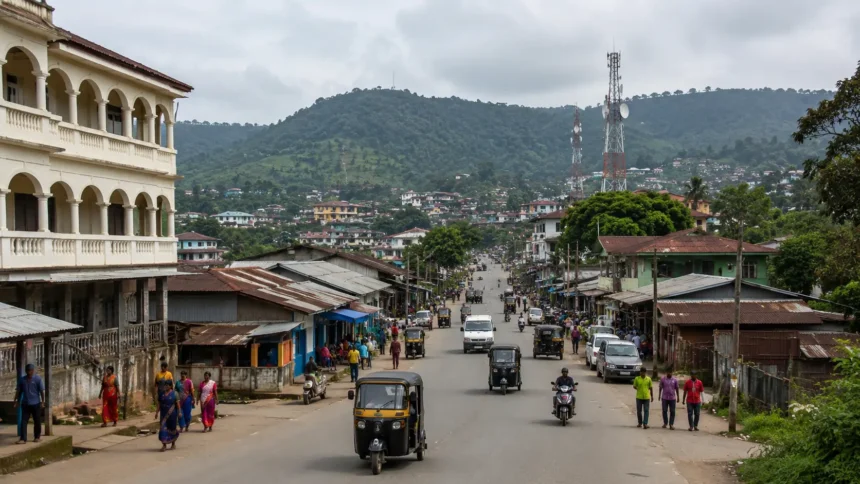
Badarpur is not just a railway town. It is one of the most historical of settlements in the Barak Valley, which for ages has been an integral part of the transport and trade system of the valley. It has been a cosmopolitan settlement for centuries. The town also has a link with the Pir-Sannyasi shrine which has come to symbolize the common cultural identity of the Barak Valley area.
These sites characterize the diversity of North East India where different religious communities have historically interacted with tolerance rather than in separation. Such a past forms a key part of the identity. To call Badarpur by a name related to religion is to potentially fail to represent a many-sided and inclusive history in all its complexity. It sets the dangerous precedent that such a specific history could in time overshadow a more diverse and wide-ranging collective past.
Proposals like that of Badarpur are not the only examples. Communities throughout India have been rechristened recently, under the rubric of retribution for past wrongs or reinstatement of native oralities. But these renaming efforts almost always spark political controversy, because they seem more worried about symbols than development.
Biased Approach: A Continuous Pattern
The defenders of the name change yet, claim that it adds to the pride of the nation and brings back the people to their origins. Conversely though, critics believe that the name change does not ‘correct the deficiencies of government policies and is no substitute for finding solutions to the present crises faced by the people’.
In truth, a town despite renaming suffers from the same problems once it still has unemployment, poor infrastructure and obscene levels of social service. Though, the growing focus on renaming indicate that symbols have by now become a substitute for good governance. Its much simpler to replace a signboard then tackle years old economic and social issues.
Names are a sentimental part of one’s identity. They maintain native histories and ensure the transmission of one’s past to newer generations. People are afraid that when these names are changed politically, their histories could be lost in altogether in time. All the northeastern ststes have their own unique culture and history. By re-naming, or re-creating identities, from places of deep historical meaning, the authorities can attempt to standardize and distort these identitiesand This way impose their political view of the region.
The time at which these suggestions had come is significant. Operational problems of Northeast India has not disappeared nor been solved. They have been multiplied with ethnic problems reappearing amid unresolved border disputes, increased unemployment, drug and human trafficking, lack of proper health care and transport facilities and widening disparity in education among the people. Manipur is suffering due to negligence and insecurity has been increased.
Other ststes are also suffering due to different aspects. Also, there continues to be a search for opportunity and economic prosperity. In this context, discussions about changing the names of villages can seem removed from the concerns of the common people. It is policies that can helps their lives that they need, not hollow headlines filled with empty jargon.
Preserving Heritage Instead of Rewriting It
Celebrating culture is fine. Re-writing history Yet is another matter entirely. Put simply, when one preserves history they protect monuments and historical sites, record additional local customs to confirm personal history, nurture native languages, and facilitate following people’s passage into the future. The point about Badarpur is that it is in the layers. It is a history that cannot be conquered by one narration, one culture, one claim. In its attempt at redefinition, renaming runs the risk of reducing that history into a slogan.
The controversy surrounding Badarpur is about far more than one town. It is a battle for defining history, identity and ownership in more precisely, a fight for having a narrative that is recognized in present-day India. Northeast India has been a land of pluralism and plurality; of coexistence of varied histories, underpinned by non-homogeneity and multiplicity.
Instead of renaming places and scotch-ing the names with already existing histories, women in power should promote the preservation of the regional history and work on the issues that still exist within the population. The Northeast does not need to have over written histories that satisfy current agendas, the Northeast needs a history that is honored, remembered and valued.