
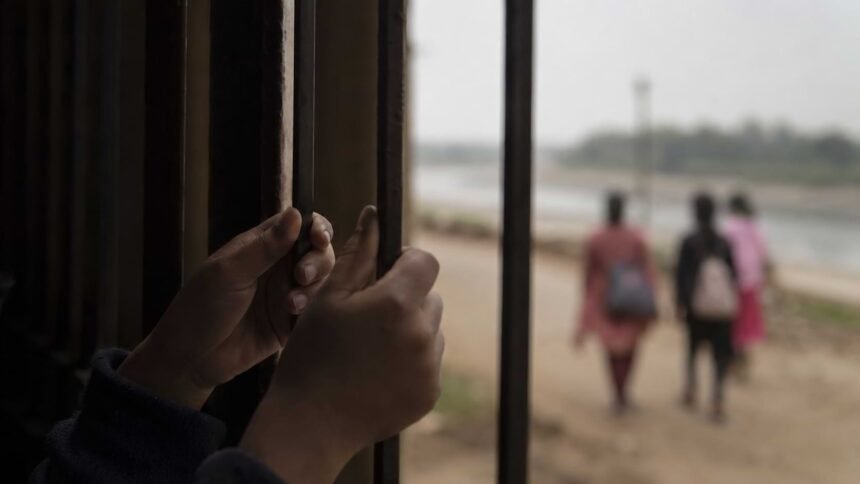
The persistent presence of human trafficking in Northeast, in many ways, places the socio-economic and political fragility of the region in perspective. Even after the promises of development, regional integration and better border control for several years, migrant women and children still remain susceptible to trafficking networks that operate within and across state and national borders. Clearly in the latest 2024 figure published by the National Crime Records Bureau (NCRB), how the distance of poverty, insecure governance, unconcealed frontiers and lack of safeguards generate a state of crisis across the region.
As per NCRB 2024 data Assam had the highest number of human trafficking cases in the year. Assam had highest number of human trafficking cases (108) in the whole of Northeast India in the year as per NCBR which was the highest versus other states.
The northern eastern geography in itself contributes as a cause to the trafficking problem. It has long and porous borders with Bangladesh and Myanmar, and the movement of trafficked victims to and from the said countries is difficult to regulate.
A large population of underdevelopment unemployment armed conflicts, ethnic violence and climate displacements have provided favourable conditions for trafficker’s activities. Fake recruitment agencies, fake offers of marriage, and the several promises of job in cities like Mumbai Delhi Kolkata etc are making pockets of poor vulnerable people, Mostly women and children. They also show us the extent of the cross-border dimension in Tripura.
In Tripura, NCRB data shows 232 Bangladeshi victims, rescued in trafficking cases. Despite such excessive militarization and fencing of the border areas trafficking despite relatively tougher border controls continues to operate very smoothly. This prompts many tough political dilemmas.
If border enforcement has become so intensified, why are the traffickers so powerful and dangerous as ever? To critics, security explanations tend to be more concerned with migration control than fighting traffickers.
Children Continue Paying the Highest Price
One of the most dispiriting features of the NCRB report is the high proportion of child victims. The geographical factors are not Per the report, around 62 per cent of identified trafficking victims in Assam were children. Children who are trafficked are often exploited as domestic slaves, bonded labourers, beggars or prostitutes. All this number do is reveal the systematic failures of the institutional machinery. Many of the target areas are still inexpugnable, the job markets are limited and the rehab system for victims of trafficking is still weak.
And, it seemed incapable of establishing any kinds of deterrent effect, in Assam, 208 persons were apprehended in cases related to trafficking and chargesheets were filed against 148 4 people but there were only 4 convictions in the whole year; in Tripura, 106 persons were apprehended and there were no convictions. Numbers like this show the dangerous mismatch between arrests and convictions: without successful convictions, traffickers can reform and endure while victims suffer for years to come.
Politics and the Linguistics of ” Invasion” That is because the trafficking debate in Northeast is merging with the politics of migration and border identity. Over years the political discourse around illegal infiltration is gaining momentum, Especially in Assam and Tripura. In addition, the debate has become community-specific like against the Bengalis speaking Muslims rather than a humanitarian and socio-economic crisis.
The misplacing of discussion on the trafficking victims and who are behind those activities in favor of nationalist issues or concerns about the change of the population composition ensues. This environment threatens to dehumanise vulnerable border populations. Migrants, workers and displaced peoples are ultimately understood from a security perspective and not as individuals vulnerable to exploitation.
Simultaneously, the state keeps promoting the Northeast as a model of connectivity and economic change. Though, numbers related to trafficking indicate the extent to which growth remains an uneven process. Infrastructure like roads, trade routes and security may grow, but people are still found without trade mean condition.
Beyond Statistics: The Human Reality
Each of those NCRB figures rides a personal tragedythe children divided from their families, women caught in the horrors of exploitative work, vulnerable migrants duped into partaking in a bigger game. The Northeast does not provide the highest percentage of the trafficking figures for India when compared to states like.
Maharashtra or according to a broader definition of ‘trafficking’, even Telangana; by far the most important perpetrators reported, the region remains exceptionally susceptible owing to its intertwined factors of poverty, border insecurities, low conviction rates and marginalization.
The NCRB report must So do more than sit there as report after report on crime collected up in a database. It must also be a call to wake up that beyond the reassuring stories of successful development and the state security is the whole of India suffering from unrelenting victimization of its already most impoverished and weak elements.
Unless the entire arena of education employment rehabilitation mechanisms and judicial accountabilities are seriously invested in, trafficking in Northeast India will continue to be a matter not only of crime but also of politics and humanitarian failure.