
The Manipur government granting the police more powers under the Unlawful Activities (Prevention) Act (UAPA) is a very important step up in the state’s approach towards security. Officials say it is needed to fight “unlawful and anti-national activities.” However, the ground reality is more disturbing in that granting more powers usually lead to an increase in abuses, especially against the weak and minority sections.
Law as a Tool or a Weapon?
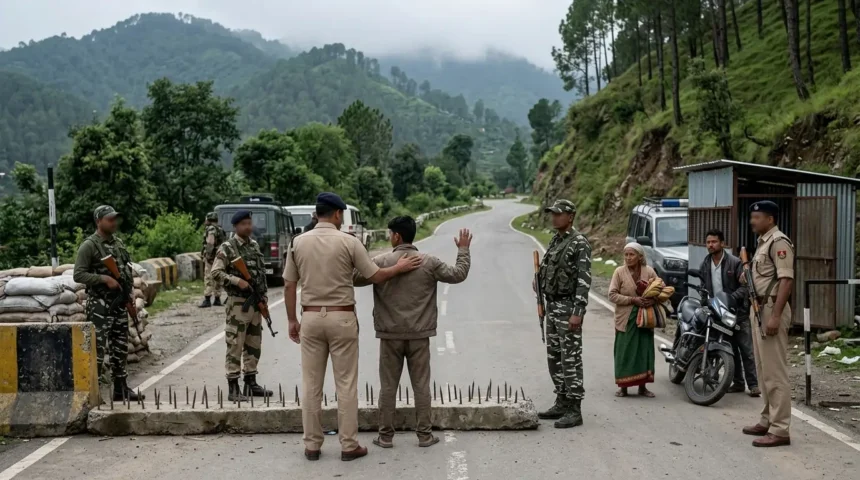
While UAPA was initially created as a piece of anti-terror legislation, it is now frequently being lambasted for the open-endedness of its provisions and its grant of very broad powers to authorities. In Manipur, permitting even police constables, the lowest rank, to carry out arrests, searches and seizures without proper checks is very alarming. Besides, “reasonable suspicion” is a very loose term and can be used for varying interpretations. In conflict-ridden places such massive discretion predominantly results in detentions without reason, intimidation, and making civilians targets of security operations under the pretext of national security.
Northeast India: A History of Militarised Governance
The Northeast region of India has seen a very high level of militarization for a long time. This was especially due to laws such as Armed Forces (Special Powers) Act (AFSPA), which has been enforced in different parts of the region since 1958. According to human rights groups, thousands of persons over the years have been victims of enforced disappearances, killings in custody, and fake encounters, among other violations.
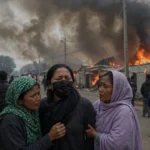
One of the incidents that are often referred to is the Malom Massacre in 2000 when security forces in Manipur allegedly shot dead 10 civilians which led to years of protests by activist Irom Sharmila. More recently, during the ethnic conflict that has been going on in Manipur since 2023, the situation has been reported to result in over 200 deaths and tens of thousands of people being displaced. Besides this, there have been allegations being raised repeatedly by various groups about the use of excessive force, biased policing, and failure of authorities in protecting minority groups. Many are concerned that with the UAPA granting even more power to the police time and again, there will be a continuation and a worsening of these issues.
Kashmir: A Parallel Reality
The scenario of Jammu and Kashmir echoes the contradictory situation very heavily indeed. In this case, UAPA and AFSPA have been used concurrently for a long time, thus helping to perpetuate an atmosphere whereby the conferment of extraordinary powers is regarded as normal. According to the information shared by civil society groups, over the last ten years a large number of persons have been arrested under the UAPA, usually without their being able to get a trial within a reasonable time.
Convictions under UAPA are virtually non-existential look at the figures reveals that in most cases, they are only around 2-3%which totally brings into question whether the arrests are really evidence-based or if they are just preventive suspicion. On the other hand, it is quite normal for people to be imprisoned pre-trial for years, which in fact, is penalizing them without declaring them guilty in a court of law.
There have been instances when the government has been accused of killing people outside the court process. This drawing of the Shopian Encounter Case, where it turned out that the civilians killed were actually laborers wrongly declared as militants, is a great example of the risks of giving power to people without sufficient control. These kinds of events not only cause more suspicions but also confirm the belief that the laws intended to ensure people’s safety are, in fact, the tools with which the authorities exert control.
Human Rights Betrayed Worse
Many international human rights organizations, Amnesty International and Human Rights Watch amongst them, have been expressing their apprehensions about the functioning of the UAPA. Their study points to a consistent array of decisions arbitrarily made, absence of the judicial process, and the harassment of activists, journalists, and minority groups.
A wide range of areas covered by the law along with a lack of strong protective measures makes it very susceptible to misuse especially considering the law being primarily geared towards politically sensitive areas.
In both Kashmir and the Northeast, a security structure that combines counterinsurgency efforts with civil policing has emerged in such a way that it becomes difficult to distinguish between security enforcement and infringement of human rights. Consequently, there is a lack of a mechanism to hold people accountable, and in many cases, justice is not only delayed but completely denied.
The Danger of Turning Exceptional Powers into the Norm
The most worrying aspect of the Manipur government’s latest decision is not just the immediate expansion of their power but the long-term normalization of the emergency measures. When the exceptional laws are repeated, the space for civil liberties is correspondingly reduced. People will start to live in an environment where they are always being watched and scared, where speaking against the government can be considered betrayal, and simply being suspected can result in detention.
A Cycle That Calls for Examination
It is usually the case that in order to justify stronger laws one cites the need for security–but security without accountability very well can become repression. Experiences of both Manipur and Kashmir are witnesses that the powers given to one party to do whatever they want without being held accountable rarely lead to the end of the conflict. On the contrary, they contribute to the prolonging of the conflict through deepening resentment, fueling the feeling of being an outsider, and resulting in the repetition of the same situation over and over again.
If it was to aim is to achieve stability then the use of laws such as the UAPA should be very strictly regulated, done in a manner public to everyone and with respects being made to the basic human rights. However, the manner in which this has been implemented done, these are increasing injustice, with the already disadvantaged communities suffering the most.