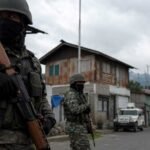

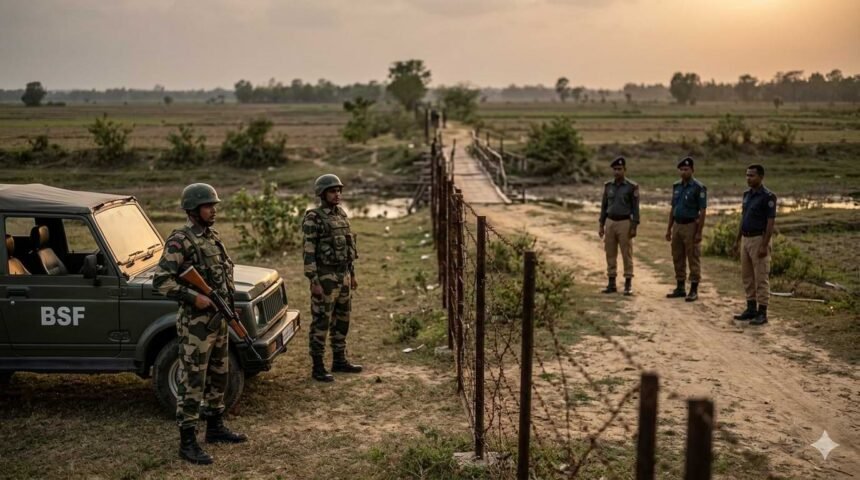
Two Bangladeshis were killed Kasba border area of Tripura, India on 9th May 2026 which has raised concerns about human rights violation in the region. This tragic event has highlighted the major issue of use of force by Indian BSF on foreign soil, mainly on the border line of Bangladesh. But many people are concerned that this is not just an issue of border.
As per the Indian and Bangladeshi media reports, the two persons killed, Md Mursalin and Nabir Hossain, who were allegedly involved in smuggling goods across the border, were shot when the BSF personnel opened fire during the anti-smuggling operation. They were then handed over to the Border Guard Bangladesh (BGB) after a flag meeting.
The Use of Weapons Under the Name of Protection
Indian officials have justified the use of guns as self-defense and said that a group of 15 smugglers attacked BSF members with stones and sharp weapons.
But the matter has raised various questions and concerns on issues such as use of excessive force, lack of transparency and repeated killing of innocent people at the border.
People die at the india, Bangladesh border every year – often ordinary villagers, not fighters. The land border spans 4,096 kilometers, ranking fifth longest globally. Sections cut through crowded villages where poor families stay connected across borders. Cattle, drugs, medicine, fish young, and small goods still move regularly. Human rights groups keep saying victims are usually poor people caught in illegal activity.
Statistics That Raise Serious Questions
A rights group from Bangladesh says border violence has claimed hundreds of lives in the past ten years. Odhikar recorded numerous killings tied to border posts. Human Rights Watch once called Indian border troops for using deadly force without warning, in particular on people believed to be smuggling or crossing illegally. In a 2010 study, HRW reported BSF officers killed about 1,000 Bangladeshis during a ten-year span. Death numbers dropped after talks started between Dhaka and new Delhi, but shootings still happen often.
Security operations versus human dignity
Official BSF statistics usually show these operations as the response of the security forces to violent attacks of smugglers or infiltrators. Security agencies of India point out that border guards are confronted with very dangerous situations like entire armed criminal gangs operating along the most vulnerable stretches of a border. Several BSF personnel have also got injured or even lost their lives during clashes. Further, officials claim that trafficking across the border and the illegal movement pose threats to national security, In particular in the sensitive northeastern states like Tripura and Assam.
The political discourse around “infiltration”
The recent Tripura incident also has a more profound political as well as social dimension. Border management in South Asia is increasingly being used for nationalistic discourses, migration debates, and communal polarization. In India, the discussions on “illegal infiltration” from Bangladesh most of the times become very emotional and are used for exploiting fear to win the vote during election times. Opponents say that these narratives against “infiltrators” are actually used to stigmatize all Bengali-speaking Muslims and this creates an environment in which bordering shooting is publicly justified rather than condemned.
The Dangerous Rise of Dehumanization
A round of social media commentary about the Tripura killings showed the extent of public division. While a lot of people so-termed the BSF’s actions as a legitimate use of force for national security, at the same time, there were those who openly rejoiced the killing with a hateful language. Such responses demonstrate that border violence can slowly be desensitized in the minds of people through discourse.
It is not just worry about a single shooting that happened in isolation. Incidents like this have repeated themselves over and over in Tripura Meghalaya West Bengal, and Assam. In July 2025, there was another killing of two alleged Bangladeshi smugglers in South Tripura when the BSF found out and foiled their attempt. Cases of pellet gun firing and the killing of civilians have also led Bangladesh to lodge diplomatic protests against India.
India-Bangladesh Relations Under Pressure
Even though flag meetings are held from time to time and there is some exchange of information and coordination between the Border Security Force (BSF) and Border Guards Bangladesh (BGB), no lasting solution has been found. Bangladesh has more than once expressed its desire that India should use non-lethal methods and also set up better accountability systems. The two sides had at one time talked about joint border management plans and other confidence-building measures to help reduce deaths. The continuation of killing cases indicates that deep-rooted issues are still not fixed.
Border Killings and the Crisis of Accountability
India, which often portrays itself as the world’s largest democracy and a supporter of international law-based norms, finds ongoing charges of use of excessive force on border with Bangladesh quite disturbing and the issue raises embarrassing questions. Effective border management does not mean that fatal shootings have to be regularly witnessed and accepted as normal.
Md Mursalin and Nabir Hossain’s deaths should not be interpreted as simply another regular ‘anti-smuggling operation.’ Instead, these incidents should lead to a deep questioning of whether our present border policies are ensuring security or simply continuing the circle of violence, fear and dehumanization along one of South Asia’s most fragile borders.