

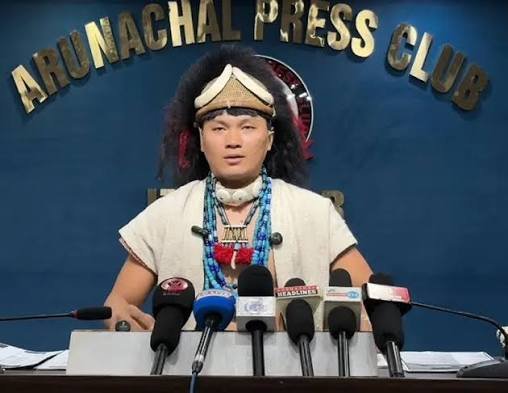
Katon Moyong, or Abor Man, is now the face of opposition to the proposed 11,200-MW Siang Upper Multipurpose Project (SUMP) in Arunachal Pradesh. As an Adi environmental engineer and community organiser, Moyong has refused to let the government declare the native resistance as ‘a matter of ‘national security’ For Moyong and the Siang Indigenous Farmers Forum, this isn’t about a dam. It’s about land, it’s about culture, it’s about life.
The figures reveal the scope of the risk. The press reports that 27 villages might be flooded, erasing the land, homes, forests, and sacred sites of relatives. Local estimates quoted in the media estimate that as many as 150,000 people could be forced to leave their home communitiesan entire indigenous universe reduced to “project-affected peoples”.
It’s not just the state’s silence on the proposed dam: its response has been equally chilling. Protesters have been detained (including Moyong, and the dozens of others protesting outside Arunachal Bhawan in Delhi). Internet services were cut for 36 hours during a Siang Valley bandh, and reports paint a picture of intense state security, curbs on movement and freedom of expression. If the state is arresting dissenters for opposing a project on their land, and cutting off their communication channels, what else can it be but branding them as seditionists?
He has traversed the villages to join the Adi and tell them not to accept any development unless the people to be displaced are given their consent. He refused to sit in the government’s dialogue because consultation without consent is not dialogue, it’s just entertainment.
India has declared the Siang its “strategic frontier” and its tribal peoples as a threat to be contained, displaced, and silenced. The Siang isn’t uninhabited territory waiting for a dam ait’s the living inheritance of the Adi. For the son of a humble village shaman, Katon Moyong’s legacy asks a straightforward question: can a democracy be one if it criminalizes the people’s right to defend their land?