
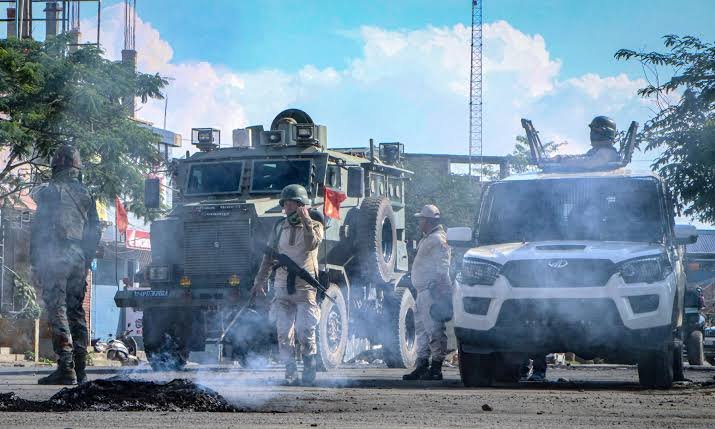
More than three years after ethnic violence erupted in Manipur in May 2023, the state remains a theatre of recurring killings. Fresh clashes between Kuki and Naga groups in the hill districts of Kamjong, Kangpokpi and Ukhrul in early October 2026 left at least nine people dead and houses burned within roughly 24 hours. This is not an isolated flare-up. It sits atop a conflict that has already claimed hundreds of lives and displaced tens of thousands, while the state’s social fabric has effectively fractured into no-go zones.
The central government under Prime Minister Narendra Modi has repeatedly projected itself as the guarantor of national security and order. Yet in Manipur the pattern has been consistent: strong statements after major incidents, meetings between the Prime Minister and the Chief Minister that produce assurances of “all possible assistance,” and then a return to fragile calm until the next round of ambushes and arson. After the Biren Singh government was replaced and President’s Rule was lifted, the appointment of deputy chief ministers from different communities was presented as a step toward political inclusion. The recent reopening of older Kuki–Naga fault lines shows how little durable progress has been made.
Armed groups continue to operate, highways are blocked, and civilians bear the cost. Demilitarising society and re-establishing the state’s monopoly on force remain unfinished tasks. Treating each cycle of violence as a law-and-order problem that can be managed through temporary deployments and political optics has not produced a settlement. Until the Centre moves beyond assurances and imposes a credible political process that addresses root grievances across Meitei, Kuki and Naga communities, Manipur will keep generating headlines of fresh deaths.