
Three years after Manipur descended into the bloodiest ethnic conflict in India’s recent history, the state’s political class has found a new fault line to exploit, not relief, not rehabilitation, not justice for the dead, but a single, loaded number: 1951.
That is the base year Meitei political outfits and a BJP-aligned state government now want frozen into law as the cut-off for Manipur’s National Register of Citizens. On the surface it is framed as a technical exercise. In practice, it is demographic engineering dressed up as bureaucracy, and it is unfolding in a state still counting its dead.
The scale of the wound
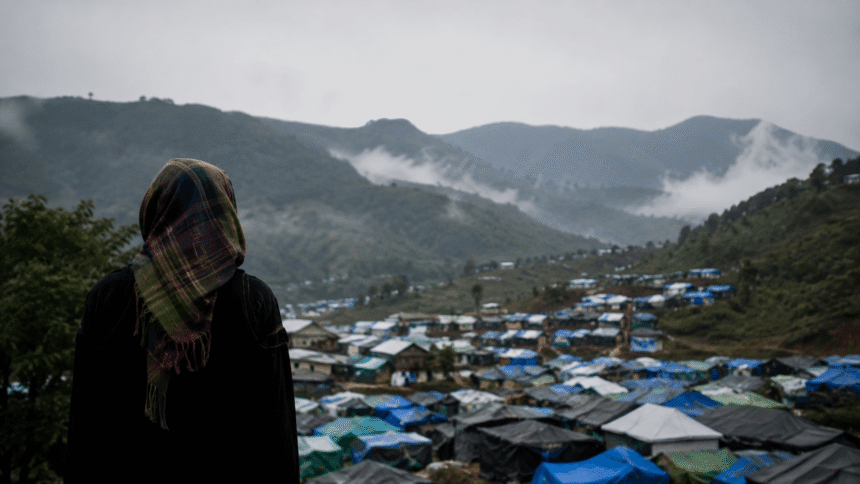
The numbers are staggering by any measure. Government data confirms at least 217 people killed and nearly 59,000 displaced since violence erupted on May 3, 2023, figures civil society groups consider an undercount, with independent estimates placing the death toll above 260. More than 58,000 people remain internally displaced across the state, spread across some 281 relief camps. Children have lost years of schooling. Residents report struggling to secure even two meals a day. Sexual assault and unresolved killings continue to be documented inside the camps themselves.
President’s Rule sat over Manipur for a full year, from February 2025 to February 2026, after then-Chief Minister N. Biren Singh, long accused of favouring Meitei interests during the violence, resigned in disgrace. And the moment elected government returned, the priority was not reconstruction. It was a citizenship register targeted at determining who, in the eyes of the state, truly belongs.
A base year built for exclusion
The Kuki Zo Council has explained precisely why 1951 is not a neutral benchmark. Manipur’s hill districts were, at that time, largely inaccessible, no roads, no meaningful administrative reach. Entire villages were never enumerated. Locking that gap into law today does not “verify” citizenship; it manufactures illegality for communities failed by the state seven decades ago. This is not hypothetical. India has run this experiment before: Assam’s Supreme Court-monitored NRC update excluded nearly 1.9 million residents in 2019, plunging families into years of legal limbo and detention proceedings. Manipur’s Kuki-Zo civil society groups are now in Delhi, lobbying the Home Ministry, not to block the Census, they have said they welcome it, but to stop 1951 from becoming a tool that erases them a second time.
Political theatre, not accountability
Meanwhile, the machinery pushing this agenda is transparent. A BJP Rajya Sabha MP has demanded the NRC precede delimitation, a naked bid to fix electoral boundaries only after deciding whose votes count. A Meitei-dominated Assembly has passed resolution after resolution, in 2022 and again in 2024, while displaced communities wait for houses that no longer exist. The state government insists it is neutral even as its own chief minister stages appeals to Meiteis to act as “big brother,” reducing equal citizenship to a favor granted from above.
The Census itself, a routine population count, has been turned hostage. Training sessions cancelled. Enumerators harassed. Roads blockaded. Effigies of the chief minister and home minister burned in the streets.
Manipur does not need another citizenship interrogation. It needs its displaced housed, its dead accounted for, and a government willing to govern all its communities equally, instead of legislating who gets to be counted as Manipuri at all.