
The stats of National Crime Records Bureau 2024 has revealed a very important yet bitter truth about Northeast India which shows that human trafficking is highest in many parts of indian northeast states. Though North East officials praise the region as becoming more peaceful with fewer insurgents and more connectivity, the numbers tell another storyone of hundreds waiting in bondage.
As many as 108 trafficking cases were reported in Assam in 2024 recording the highest number of trafficking cases reported in Northeast India followed by Tripura at 62, Arunachal Pradesh(8). Assam alone identified 155 trafficking victims of which 96 were children below 18 years. Even more distressing was the sex ratio of the victims that showed 126 were women girls.
A Pattern of Trafficking In Northeast India
The Northeast has always been susceptible to trafficking due to its strategic location. The region borders Bangladesh and Myanmar which enables the large movement of goods and people through unregulated borders, inadequate security arrangements along the frontier and economic hardship among rural population. Geography alone cannot account for the crisis.
Poverty unemployment ethnic violence, displacement and weak state institutions have created an environment in which traffickers thrive. Described by researchers and human rights groups as a trap in the form of a ‘trafficking corridor’, Northeast India has long been considered a place where fake jobs, marriage offers and promises of migration draw in oblivious individuals and lead to exploitation.
The NCRB figures indicated that 232 of the victims rescued by authorities in trafficking cases in that state were Bangladeshi the highest cross-border trafficking number for the entire Northeast. The magnitude begs the question of how such large criminal set-ups are able to operate in such a free manner despite the high border militarisation and security talk?
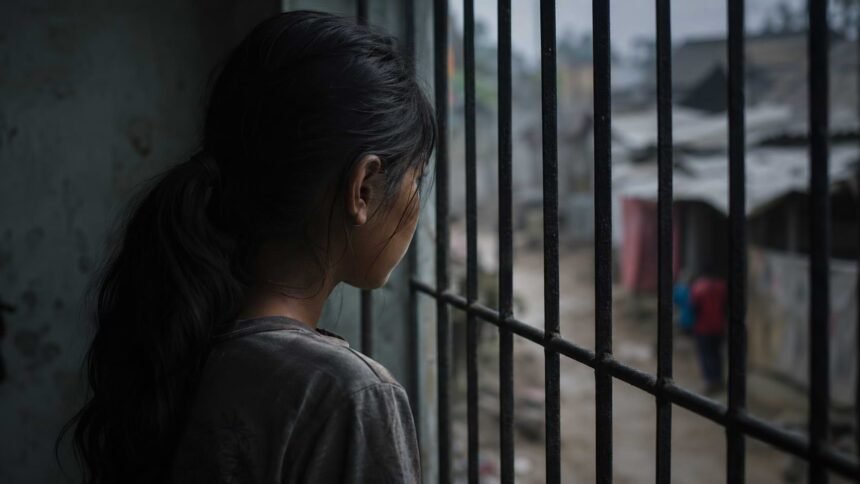
Perhaps the scariest elements in the NCRB report are the children victims. Almost 62 per cent of the trafficking victims in Assam are children. Several of them are forced into domestic slavery, forced labour, sexual slavery or entry into illegal labour syndicates in the prime cities of India.
The Failure of Institutions
The victimization of children is a direct reflection of the failure of institutions. Despite intensive public awareness and anti-trafficking measures, the conviction rate is abysmally low in India. In Assam alone, 208 people have been arrested in trafficking cases and chargesheets filed against 148 persons, but the year ended with only four convictions.
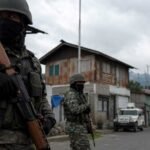
Tripura arrests 106 with no conviction. Numbers like these reveal the weakness of the criminal justice system. Police are making arrests that make for good press, but trafficking remains unpunished for want of convictions. Security Narratives Cannot Hide Humanitarian Failures To be exact, Indian authorities tend to treat trafficking as a border-security matter related to infiltration and illegal migration. The reality of cross-border crime is not diminished, but the conflation of trafficking with a security crisis may undermine efforts to address its root in the national socio-economic situation.
While bordering states have become highly militarized, this has in fact not eradicated trafficking. It has tended to push more and more people into the more risky underground economy. In most villages along the Bangladesh border, one must apply for their existence through informal employment and trade. Criminal Gangs prey on this vulnerability. Meanwhile, political rhetoric surrounding “illegal migrants” has grown more communal in its focus, Mainly in respect to Bengali-speaking Muslim migrants. As pollsters contend, such rhetoric contributes to the “othering” of border populations and the leading to the perception of vulnerable border migrants less as victims than as as security threats.
The Silent Crisis Behind Development Narratives
Governments often tout Northeast India as an emerging economic gateway linking South Asia to Southeast Asia. Infrastructure projects, trade corridors and security operations fill official accounts. But the trafficking figures tell a different story: how little of this actually filters down to the most marginal populations. Women and children continue to be most vulnerable as education, jobs and social security systems are still not built up in significant number of districts. Displacement due to climate change, floods and persisting ethnic clashes have put additional migration burdens on Assam, Tripura and adjoining states. Again, the while trafficking persists, this masks a far deeper crisis of governance.
If hundres of victims are still found and rescued on a regular basis, where conviction rates remain extremely low, then the problem becomes no longer how many anti-trafficking systems can be documented on paper, but how many are effective on the ground. Every NCRB figure hides a human story of enslavement, coercion and suffering Children torn away from their families, women beaten and left in servitude or debased by sexual violence, migrants-driven into organised criminality and forgotten.
The Northeast may not have the highest trafficking figures in India (states like Maharashtra and Telangana perhaps do), but its highly porous border, high rates of poverty, weak law enforcement effectiveness and political exclusion make it In particular vulnerable. Without governments shifting away from security-dominated discourses and making appropriate investments in education rehabilitation local job creation and judicial accountability trafficking networks will continue to out pace the responses of the state and so the NCRB report should not be reduced to just another set of annual crime figures. It is a reminder that behind the rhetoric of development and national security, a whole region is still fighting against exploitative practices that mostly keep the very poorest and most marginalised of its people in check.