


When political scientists toss around terms like “Banana Republic,” it’s easy to dismiss it as alarmist rhetoric meant for Latin America or the corridors of Delhi. Though, if you pay a little more attention to the hills and valleys of Northeast Indiafrom the streets of Imphal to the students’ unions of Guwahatiyou will realize… why?
For more than ten years, the national political scene has been so preoccupied with comparing Narendra Modi to Jawaharlal Nehru that it has become almost an obsession. But as Dr. Khairnar points out quite rightly, if Nehru was so irrelevant, then why was Modi being constantly contrasted with him? For the eight sisters, this is not just a dispute over history. It is a matter of the very essence of federalism. The story that Modi has “outdone” Nehru’s period in office doesn’t take into account a hard truth: democracy in the Northeast is so often a stranger that it hardly feels like a normal part of life there.
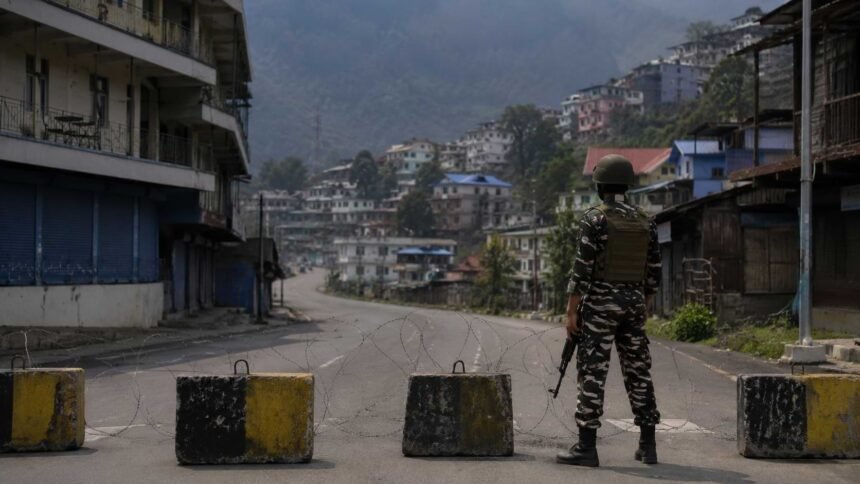
Take Manipur, for instance. While the rest of India debates election manifestos, villages in the hill districts have lived through a year where the internet was a luxury, armed forces roamed freely under controversial acts, and the elected government was reduced to a spectator. Or consider Meghalaya, where traditional tribal councils, institutions far older than the Constitution, are increasingly finding their customary laws overridden by central ordinances drafted 2,000 kilometers away.
This is the warning about the “banana republic” hits home, three symptoms: wealth concentrated among elites, institutions serving power, and persistent inequality. The Northeast is a living laboratory of these symptoms. The region holds immense hydropower potential and natural resources, yet many villages still lack reliable roads. Wealth flows out; poverty remains. The citizens of Nagaland or Mizoram often joke bitterly that they only remember they are part of India during elections or during a blockade.
The Emergency of 1975 is a touchstone. Elders in Shillong still whisper about press censorship and political arrests. But today, they argue, the chokehold is different. It’s quieter. It’s the bureaucratic threat to a student activist who posts a critical meme. It’s the transfer of a blunt IAS officer from a state she was holding together. The current system doesn’t need to suspend the Constitution; it just stretches it until the checks and balances snap.
O. Henry’s concept of “banana republic” was not only referring to dictatorships. he also looked at the situation in places where the external trappings of a democracy – a flag, a parliament, and elections – are present, but the real democracy is conspicuously missing. The Northeast is the first to notice when the Election Commission, the judiciary, or even the University Grants Commission, lose their independent image. These are regions already sensitive about “mainland” dominance.
Fifty-one years after the Emergency, the fear isn’t a midnight curfew. It’s the slow normalization of centralization. The BJP and RSS leaders who once tasted authoritarianism from the other side are now accused of creating a system where power is a vortex in Delhi. For a student in Aizawl or a businessman in Dimapur, “India’s democracy” is not about who broke Nehru’s record. It’s about whether their voice can survive the noise of a majoritarian system.
The Republic is not lost. But a democracy cannot survive on elections alone. It needs dissent, independence, and space for local identity. Without that, the Northeast, India’s own fragile frontier, might teach us all a painful lesson about what happens when a democracy looks like one, but no longer feels like one.