

As of April 22 2026 a harsh reality has formed within India’s national security framework: a network through which intelligence is disregarded, disasters are used for political gains, and the chain of responsibility is broken almost altogether.
A group of armed militants stormed the valley meadow on April 22, 2025, just one year ago. They opened fire, killing at least 26 civilians in what became the worst terrorist incident in India since Mumbai’s 2008 tragedy. The families still grieve, but few know how security failures allowed this to happen. Generally, oversight gaps stay hidden behind official silence. Still, evidence points to patterns where responsibility goes unchallenged across departments.
Blood in the Meadow: The Pahalgam Lapses
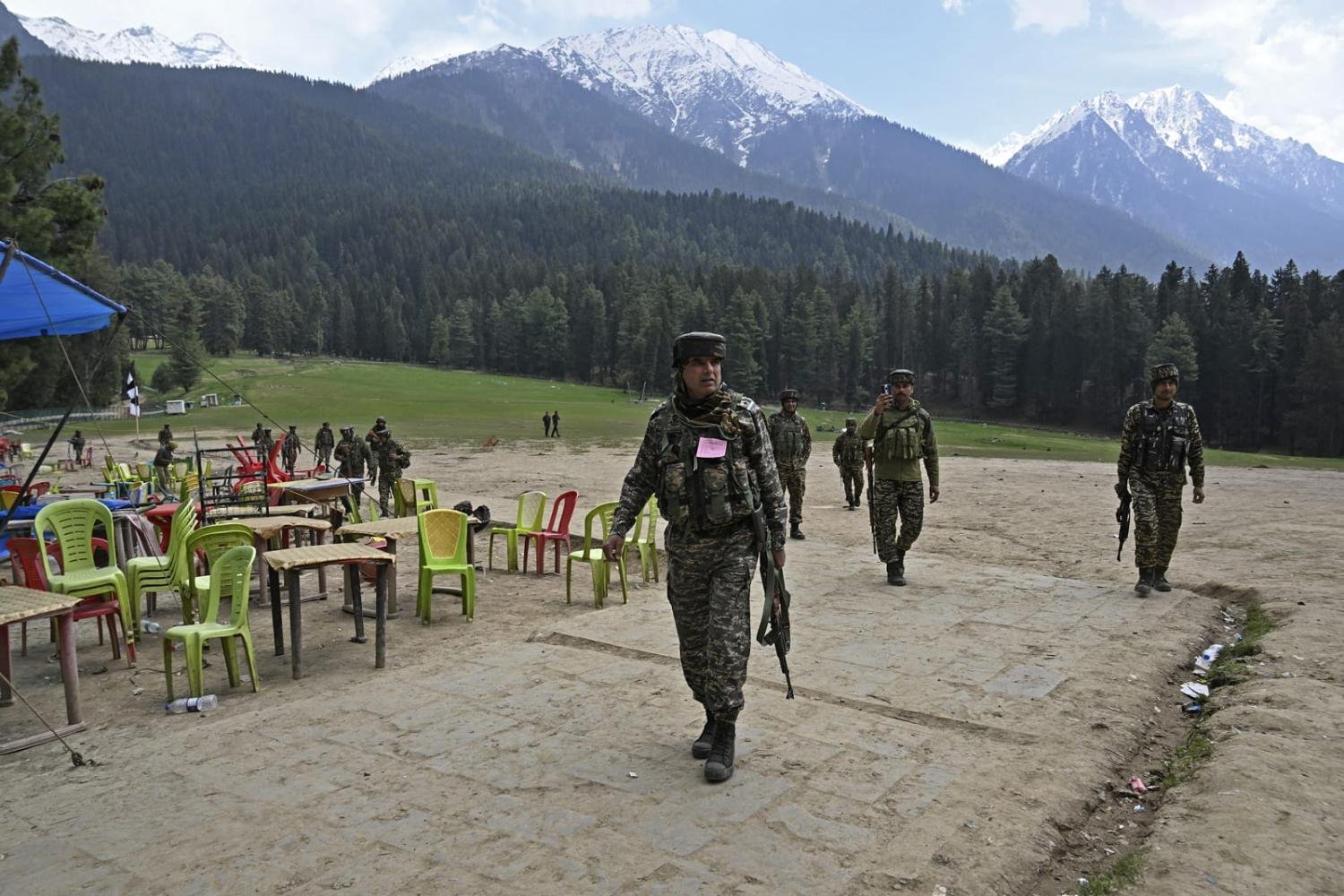
The incident in Pahalgam was more than just one bad day; it was a tangible, recorded failure. At the moment when the terrorists struck, hundreds of tourists were in Baisaran. In spite of the fact that the closest army post was only about a kilometer away, the authorities had not provided enough personnel to secure the popular meadow. A Central Reserve Police Force (CRPF) post near the location had been withdrawn in January 2025 and was never put back, although there was intelligence indicating an attack in the valley. The government did not even go so far as to advise tourists in a general way about the potential dangers of crowded places.
Given a free hand by these lapses, the attackers fired approximately 40 shots in a 15-to-20-minute window and escaped without engaging a single security officer. In a location receiving over 1,000 visitors daily, there were no surveillance cameras, no drones, and no basic medical response system. The tragedy revealed the harsh contrast between the real situation and the politicians’ words as it happened only a few weeks after Home Minister Amit Shah’s visit to Jammu and Kashmir where he declared that the “whole terror ecosystem” in the region had been “crippled.”
The Death of Political Accountability
A year later, the government’s admission at an all-party meeting that “lapses occurred” remains hollow. Zero accountability has been fixed in the civil or security administration. The Home Minister missed even one security failing in a long 70-minute speech in Parliament. International Crisis Group’s analysts have been maintaining that the government still owes the people a detailed explanation of what went wrong and why including the full names of the perpetrators, weapons seized, and a detailed timeline of the operation.
This lack of responsibility is a relatively new one. Senior Congress leader and former Home Minister Shivraj Patil is the only Indian minister who resigned over a security failure after the 2008 Mumbai attacks. No official has yet taken institutional responsibility for any major attack on Indian soil in these 17 years.
Pulwama 2019: The Blueprint of Unaccountability
Pahalgam incident was only one of the inadvertent effects of the charting of the terrorist attack on Pulwama, carried forward through the template of the failure in Pahalgam. A suicide bomber killed 40 jawans on February 14 2019 that is Pulwama attack few days before that event, the Central Government had received at least 11 intelligence inputs from the Intelligence Bureau and Kashmir Police, and on the other hand, Jaish-e-Mohammed had uploaded a video which was communicating a strike.
Despite these glaring red flags, the Home Ministry refused to provide CRPF aircraft, forcing 2,547 personnel to travel through a vulnerable highway in a massive 78-vehicle convoy. The CRPF’s own internal inquiry found that the unusually long convoy made the target tragically easy to identify.
As a former Army Chief bluntly stated at the time, “Failure has no claimants,” noting that available aircraft should have been used. Nevertheless, there weren’t any resignations or prosecution. Instead, the Pulwama incident was effortlessly changed into the Balakot storyline, which was a very effective election weapon in the 2019 Lok Sabha elections.
Protecting the State, Persecuting the Citizen
States that fail to protect citizens, in fact, often try to make up for it by punishing the very citizens. Instead of institutional reform, the post-Pahalgam episode turned into a massive police raid of people. Official statistics show that around 2,800 people were taken into custody, amongst whom were journalists and human rights defenders. The authorities used PSA or UAPA in many instances to avoid charge sheets or trials. Ex-CM Mehbooba Mufti called it “a sweeping and indiscriminate crackdown”, in fact, “collective punishment” on them.
UN and other international organizations also raised their voices. First of all, UN experts have denounced house demolitions that are often considered punitive, that are carried out without court orders, communication blackouts, and the blocking of approximately 8,000 social media accounts, by pointing out these actions were going against the Supreme Court of India itself according to the UN experts report. On top of the misidentification, police wrongly named two of the attackers as Kashmiris – who were later on the NIA-s cleared ones. By the time the correction was made, the national media had already used the false information to blame Muslim and Kashmiri communities all over the country. The pattern becomes clear: security quite simply getting away with everything, and civilians holding the brunt of the punishment physically and violently.
Manipur: The Anatomy of a Slow Massacre
This architecture of state failure extends far beyond Kashmir. In the northeast of India, mainly in Manipur, the current situation can be described as a very large scale and very slow massacre indeed. Up to November 2024, the authorities revealed that at least 258 people have lost their lives 60 000 people have been made homeless, more than 1,000 are wounded, and a large number of religious places and houses have been set on fire since May 2023.
The main armed factions like Arambai Tenggol and Meitei Leepun have been acting with almost total freedom and there is even evidence of state support for them. Indian Army agents went as far as saying that rebel fighters who were operating were also training the civilian mobs with live military weapons that had been stolen.
For the first two and half months since Manipur erupted, the mainstream television media completely disregarded the plight of the people; only when a terrible video showing two Kuki women being naked in public and gang-raped went viral did the whole country get angry. However, the violence has persisted even in 2026. On April 7, just two weeks back, a rocket-propelled grenade which was fired from more than three kilometers away, hit a home in Bishnupur and killed a five-year-old boy and a six-month-old girl. Two Tangkhul Naga civilians were the victims of an ambush at National Highway 202 on April 18. This state is still suffering one of the longest internet shutdowns in India. Since the outbreak of unrest, Manipur has seen at least 314 insurgency-related deaths in 140 separate episodes. As expected, no senior official has been made to answer for the disintegration of the state.
Capacity Without Consequence: The Structural Verdict
Three distinct theaters of violence, Pulwama in 2019, Manipur from 2023 to 2026, and Pahalgam in 2025, reveal one consistent structural verdict. Whether it is 40 security personnel dead after 11 ignored intelligence inputs, 258 civilians killed amid documented ethnic tensions, or 26 tourists slaughtered after the removal of a security picket, the institutional fallout remains at absolute zero.
India has the world’s 3rd largest armed forces, an enormous 6. 2 lakh crore defense budget for FY2025, and among the largest domestic intelligence coverage in the world. In fact, as per the Combating Terrorism Center at West Point report, the situation with militant violence in J&K has been changing phases three times over 2019-2024, with a fresh serious escalation of violence from 2024 onwards.
However, the mechanisms that tackle terror still seem to be more reactive rather than preventive in J&K. There is no shortage of capacity, manpower, or intelligence in the Indian state. It lacks consequence. Until security failures carry a severe institutional cost for the political and administrative leaders who design and oversee them, and not just for the civilians and foot soldiers who are left to survive them, Pahalgam will not be the last meadow soaked in preventable blood.