
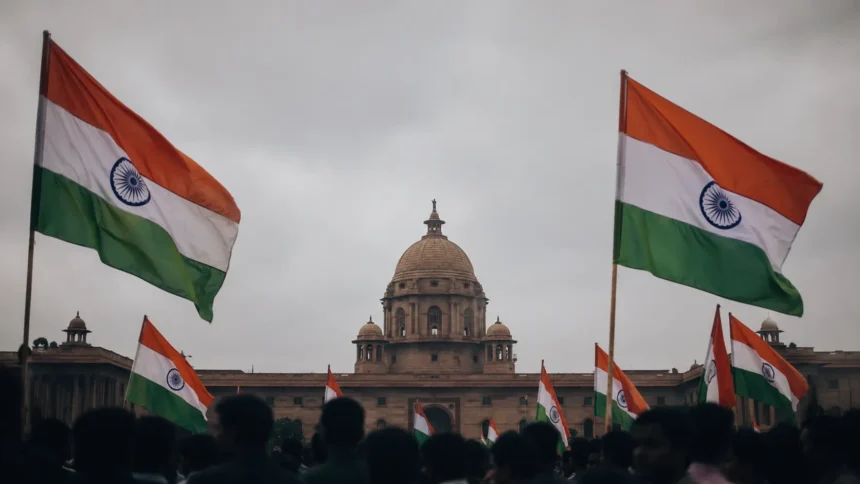
The result in West Bengal handed the BJP a majority it had never enjoyed before, even though the state had been a bastion of Mamata Banerjee and the Trinamool Congress. However, this result seems less to be a real mandate and more to be a consequence of the campaign activities and the public’s growing desire for change. Some are concerned that the BJP’s victory could disrupt the democratic equilibrium and further aggravate the already existing political polarization.
From Margins to majority: BJP’s Strategic Rise
BJP has reclaimed approximately 200 seats out of the total 294, which indicates a great deviation from the previous election trends when they hardly made any progress in the state. The emergence of BJP as a major force seems to be not only a protest against TMC’s governance but also a result of the party’s well-organized and properly funded campaign that managed to win over voters through direct communication and consistent messaging.
Besides electoral strategy, the factor behind BJP’s resurgence in Bengal seemed to be religious mobilisation. Sometimes the focus of the campaign was on the assumption that the TMC was “appeasing Muslims,” a point of the argument that was supported by many BJP leaders including the state figures like Suvendu Adhikari. This portrayal was one of the factors leading to what many observers indicate as the strengthening of Hindu votes. It has escalated the debate about the God of the future directions of the secular nature of India.
Charges of Rigged Elections and Partisan Institutions
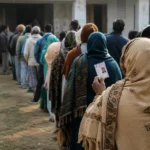
The Special Intensive Revision (SIR) of voting lists performed by the Election Commission of India was probably the most arguable point of the election. As a result of the grind, allegedly over nine million voters were taken off the rolls – almost 12 percent of the electorate. The opposition including Mamata Banerjee was sharply critical of the gesture, describing it as “opaque, hasty and unconstitutional”. She went to the Supreme Court of India contending that the method used significantly led to the disenfranchisement of minorities and poor economically groups.
Independent observers and the concerned groups have supported these points of view and have put forward the idea that the magnitude and the timing of the exclusions of the voters may have contributed to the distortion of the level playing field. The links of cause and effect are still in question and some have only questioned the issue while the controversy has brought about a rise in the demand for independent scrutiny of the institutions under BJP administration.
What the Opposition Claims?
How does a party built on visible wins still face distrust? Many people claim the BJP’s funding model, Mostly the electoral bonds scheme, let big corporations donate without names, hiding where power truly flows. Rahul Gandhi has pushed back hard, saying the government quietly chips away at democracy, not through laws alone but through financial manipulation. He sees the system as locked tight around one group, pushing voices from outside out of reach. The BJP insists votes speak for themselves and rejects claims of bias. Still, opponents keep circling this issue – like a current that won’t die down, even when officials deny it outright. Mamata Banerjee hasn’t bowed to losses. She opened with fury, accusing central agencies of being used beyond their purpose and calling the BJP’s rise an illegal takeover of public space. In practice, both sides see this not as politics – but as a struggle over how decisions get made behind closed doors.
Her communication to party cadres – “We will fight like the cubs of a tiger” – suggests that the TMC will not disappear without a fight. The language used by Banerjee does not merely indicate defiance; it also unveils the BJP’s ascent as a menace to regional independence and diverse politics.
But the defeat considerably diminishes her image as a national rival to Modi, a character that she had been assuming more and more after the 2024 general elections. Rahul Gandhi sees the result in Bengal as just one example of the whole pattern. He has on many occasions pointed out that Indian democracy is being weakened and used investigative agencies against opposition leaders, media pressures, and what he calls the “capture” of institutions as evidence.
Religious lines and the notion of vote shift
That shift followed years of political campaigns emphasizing Hindu identity, which turned out to deepen divides between city and rural voters. Muslims, making up over a quarter of bengal’s people, felt left behind – either genuinely or simply seen as politically sidelined.
The ruling party won large shares of key constituencies through targeted messaging, Mostly in areas where Hindu dominance was visible. Still, this method stirred backlash from civil society groups claiming it inflamed hatred and made politics about faith rather than policy.
The victory reshaped the national stage dramatically. And it boosted Modi’s profile and brought his coalition farther into eastern India’s heartland. The path to power included disputes over voter lists and claims that local institutions were biased against rivals.
Opposition parties face more than a campaign gap, they struggle to regain trust after being pushed out of major strongholds. Their platforms now need both new energy and clearer values to challenge the current model.
Bengal’s outcome might stand out in history not just as a win – but as proof that democracy can be contested on identity lines instead of shared interests. The future of political contestation in india could hinge on how well leaders manage these tensions without losing legitimacy.