
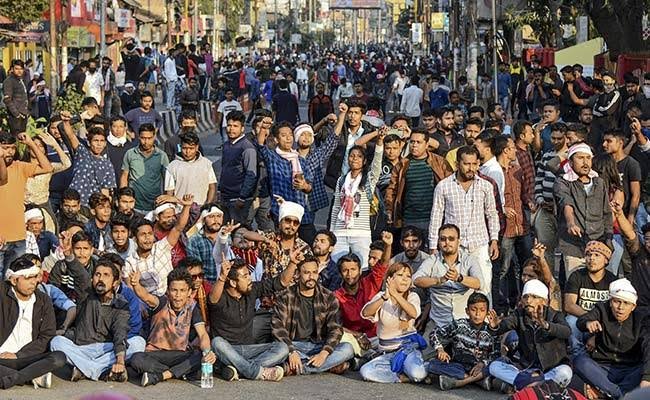
On 18 October 2026, the All Assam Students’ Union (AASU) called for a rigorous revision of electoral rolls to delete the names of illegal Bangladeshi nationals, a re-verification of the National Register of Citizens (NRC), and concrete action on Clause 6 of the Assam Accord. AASU chief adviser Samujjal Bhattacharya recalled that the 1979 Assam Movement itself began after foreigners were detected on voter lists, yet decades later the Election Commission still cannot produce clean rolls free of illegal immigrants. The organisation remains dissatisfied with the 2019 NRC (prepared under Supreme Court monitoring), which excluded roughly 19 lakh people but was never officially notified, and continues to press for its correction.
Clause 6 of the 1985 Assam Accord promised constitutional, legislative and administrative safeguards to protect the cultural, social and linguistic identity of the Assamese people. A high-level committee headed by Justice Biplab Kumar Sharma submitted recommendations years ago. The state government has moved on some measures within its purview, but key central actions remain pending. Forty-one years after the Accord, AASU is still demanding a time-bound plan rather than more committees and meetings.
This is the same pattern repeated under successive governments, including more than a decade of BJP rule at the Centre. Assam was deliberately left out of the nationwide Special Intensive Revision of electoral rolls because of its special citizenship regime under Section 6A of the Citizenship Act and the unfinished NRC process. Instead of delivering an error-free register that can serve as the foundation for clean voter lists, the Centre and the Election Commission have offered another limited Special Summary Revision. The result is that indigenous communities continue to raise the same alarm that triggered mass protests in the late 1970s and early 1980s.
Promises of “implementation” without resolution of the core issues detection, deletion, deportation, and genuine safeguards have left the Assam Accord’s most important clauses unfinished. Until the Modi government treats the unfinished business of the Accord and the NRC as a priority rather than a recurring talking point, AASU’s questions will keep exposing the gap between rhetoric and results.