
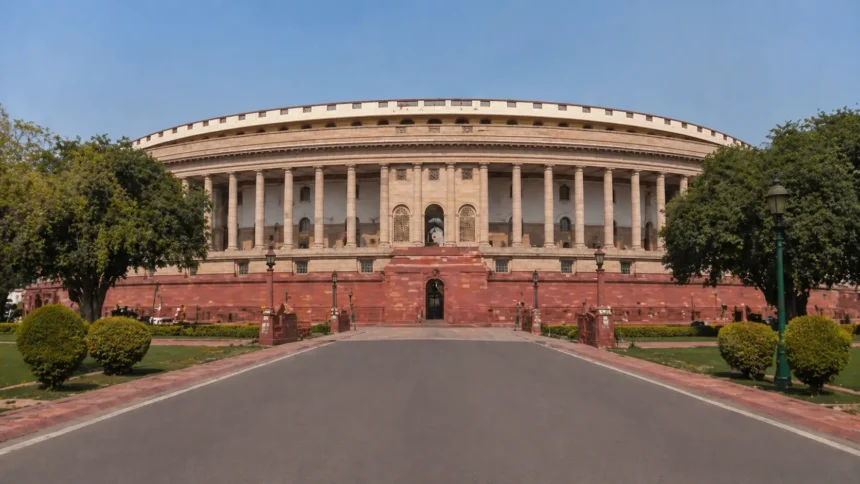
With India gearing up for a major phase in its democratic rewriting through the proposed increase and redrawing of seats in the Parliament and Legislative Assemblies, an essential question comes up: should representation in the Lok Sabha and State Assemblies be based only on population figures or should it also portray a wider idea of federal balance, fairness and national unity?
The two Bills intended for the Special Session of Parliament aim for three major reforms:
1. The expansion of the Lok Sabha to 850 seats (815 for the states and 35 for the Union Territories) from the current 543
2. The replacement of the constitutional freeze related to the 1971 Census by a flexible arrangement
3. The setting up of a Delimitation Commission based on the 2011 Census. Besides, this exercise is also devoted to the operationalization of the Women’s Reservation Act 2023 which provides for 33% reservation of women in legislatures.
The Current Debate
Using the 2011 Census data to determine the number of seats has raised issues among the southern states and the northeast. These areas contend that a formula based only on population can disrupt the federal structure of India and may even weaken cooperative federalism. It is not only the numbers that matter when we are talking of representation in the diverse India; otherwise the equity among states will get compromised.
The Population Paradox
In the course of fifty years, demographic changes in India have gone in quite different directions. Tamil Nadu Kerala Karnataka, and Andhra Pradesh in the South managed to put in place very effective family planning policies and thus got the population growth under control. Many Northeastern states also managed to raise literacy-levels and human development despite the structural problems. On the other hand, several northern states sustained higher population growth. If delimitation is done solely based on population, the states that managed to control population growth may find themselves losing political representation relative to others. This raises the issue of policy contradiction: good governance may be punished and demographic growth may be rewarded.
Economic and Social Contributions
Representation should also show qualitative changes. Southern states make major contributions to India’s GDP and do very well in healthcare, education, and per capita income. Northern eastern states, though smaller in population, have achieved significant improvements in literacy and other social areas. A system that gives preference to population only risks overlooking these contributions. Fair representation is a combination of numerical strength and developmental performance so that economically and socially progressive regions continue to have a strong voice in the national decision-making process.
The Case for Northeastern Empowerment
The Northeast is an especially strong example of this issue. Since its states are quite small and have limited populations, for a long time, this region has suffered political marginalization. Its geographic isolation, ethnic diversity, and missing strategic factors such as very open international borders make strong political representation a matter of national interest.
As per the proposed delimitation, the Northeast’s share of Lok Sabha seats will reduce from 4.4% to 3.8%. Although the total number of seats may increase from 25 to 33, that is minuscule compared to bigger states. Just to take an example, Uttar Pradesh may have more than 130 seats, which is even more than the entire Northeast combined. Such disparities are indeed a cause for concern. Lowering the share of seats would mean lowering the power to influence national policymaking, particularly on matters like border security, infrastructure, and regional development. Hence it is crucial to ensure a minimum level of representation for the small Northeastern states for their voices, visibility, and inclusion in the Union.
Concerns Over “Pro Rata” Claims
The government has maintained that no state would suffer in terms of representation on a “pro rata” basis. Actually, this assumes a proportional increase in representation for all states. But the new system being contemplated does not even make the preservation of the existing share of seats a certainty.
Article 81(2)(a) of the Constitution requires that, while allocating seats, the ratio of population to seats in various states shall be kept the same. This by default will benefit the states with bigger populations. According to some calculations, the Hindi-speaking belt could add approximately 159 seats (an increase of 77%), whereas the South might add only 44 seats (33%), and the entire Northeast just 89 seats.
Hence, even if the total number of seats goes up, the proportion of smaller regions will probably go down. In other words, this is a redistribution of political power rather than everyone getting an increase.”
Learning from Federal Models
Comparative federal systems provide valuable points of reference. For example, in the United States, smaller states enjoy protection via the Senate where every state has an equal number of representatives, regardless of their size. This ensures that the larger populations do not have an overriding say in the affairs of the federation. Although India’s system is dissimilar, the same principles can be applied in a way that suits the context. Rajya Sabha can become a powerful instrument in defending the cause of smaller states alongside the Lok Sabha which is based on population representation. Stability of the federation will require a blend of representativeness and fairness.
Towards a Fair Delimitation Framework
A well-rounded delimitation method would not only consider population but also factors like: The extent of demographic responsibility and efforts at population control How much an area contributes to the national economy Social development indicators like literacy and health care availability Geographical and strategic importance The provision of minimum guaranteed representation for smaller states, especially in the Northeast. It is hoped that a framework such as this would prevent any region from feeling politically left out and that representation would be a true reflection of the population and the country’s priorities.
A Call for Collective Action This is the moment when the federal system of India will be shaped for years to come. Northeastern states should unite their action by holding joint meetings and passing papers to press for their fair share of representation. MPs of the region even if they are from different parties should string together their moves to make sure that their voices are heard without any distortion. If the issues remain unattended this time, it may change the political landscape forever, resulting in smaller areas having almost no say in the ruling of the country.