
India often claims to be a pluralistic democracy, one that protects minorities, appreciates its diversity, and really abides by its constitutional guarantees. However, the situation in the northeastern Indian state of Manipur is quite contrary to that image. What really happens is that it is effectively a big governance failure where minorities are not only unprotected but also displaced, left without help, and in some cases, they have even been forced to leave the country for safety. Recently, moving of 250 members of the Bnei Menashe community, a group that considers itself of Jewish descent, from Manipur to Israel. This is far more than just a narrative of migration. It is a serious accusation. It was recently reported that these people who went to Israel were even given a warm welcome in Tel Aviv as part of a planned community relocation effort, whereas thousands of others still live in the dangerous areas of the northeast of India. This raises a fundamental question: why are Indian citizens finding safety and recognition abroad that their own country fails to provide?
A War at Home India Pretends Doesn’t Exist
The Manipur crisis that started in May 2023 has resulted in a dangerous situation that the majority of people here call a civil war. Over 250 people have died according to official statistics, over 60,000 people have been displaced and thousands of houses and hundreds of places of worship have been destroyed.The riots had their origin in the two communities, the Meitei majority and the Kuki-Zo tribal communities. Both of their areas have been badly damaged. Besides the destruction of villages and house burns, the separation of families education health and livelihood without basic facilities are the outcomes. Among the minorities, Bnei Menashe have been hit the most. Their houses were set on fire, on a few occasions, synagogues were also vandalized, and families had to hide or go to relief camps under very “appalling conditions.” This is not a one-time breakdown. It is governing a vacuum for a long time.
The Illusion of Minority Protection
India’s constitution ensures the right to freedom of religion and protection of the interests of minorities. In reality however Manipur reveals the gap between promise and implementation. According to reports 4 700 houses were set on fire and the destruction and vandalizing of nearly 400 religious buildings, most of which belong to minority communities, have been recorded. The extent of damage is so huge that it cannot help but raise some unsettling questions:Where was the government when entire communities were displaced?Why has it been so difficult to bring the perpetrators of the violence of the last two years to justice?And fundamentally why do minorities have to leave India in order to feel secure?The relocation of the Bnei Menashe to Israel is often presented as their religious “return”. However, the narrative overlooks the important factor of their insecurity at home. Moreover, the sudden acts of migration to coincide exactly with the harsh ethnic violence and the government’s failure to re-establish law and order hardly seems accidental.
A Region Treated as a Buffer, Not a Citizenry.
Disregarding northeast India is not a story of yesterday. The place has been running under special laws such as the Armed Forces Special Powers Act (AFSPA) for a long time, which has allowed security forces to exercise very wide powers. The United Nations and other human rights groups have been pointing out time and again that the said laws are responsible for extrajudicial deaths, torture, and lack of accountability.This militarization strategy unearths a hidden reality: the Northeast in fact was at times viewed less as a part of India and more as a strategic buffer zone in terms of location, poor political representation, and social alienation. The Manipur conflict even supports such a viewpoint. National political debate almost completely ignores the rise in violence. On the one hand, the center has been blamed for focusing their electoral campaigns instead of resolving the problem, on the other hand, the locals are living with insecurities every day.
When Foreign Governments Step In
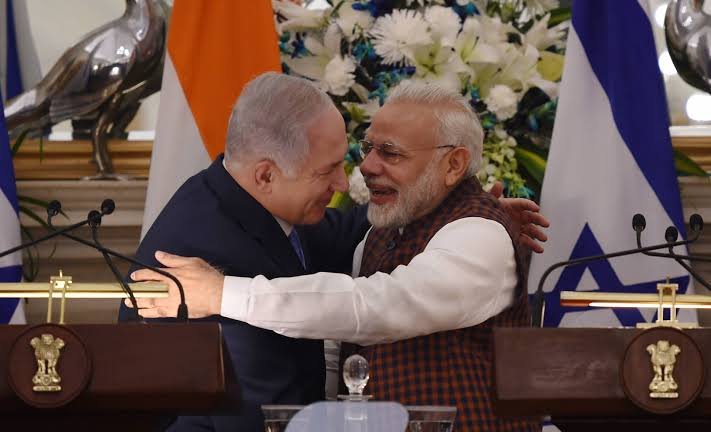
Maybe the biggest piece of evidence that goes against the Indian authorities is the fact that foreign actors seem to be more responsive than the Indian state itself. The active role of Israel in the relocation of the Bnei Menashe is a clear example of this. While India is struggling – or even failing – to guarantee safety within its borders, another country comes forward to provide protection, identity, and new opportunities. This is not only a humanitarian act; from a geopolitical perspective, it is very shameful. The first and foremost role of a sovereign state is to protect the people. When a country passes that role to someone else – implicitly or explicitly – it is a sign that the state has lost its legitimacy at a very deep level.
The Cost of Silence and Selective Nationalism
The image of India as a tolerant democracy that it tries to project to the world is sadly becoming more and more incompatible with the reality of the situation on the ground in the country. The conflict in Manipur has resulted in:Mass displacement on a scale of tens of thousandsReligious sites systematically targetedCivilians including children killed in ongoing attacks However, these events do not often get national news coverage or become top political concerns. The selective silence on these issues only adds to the impression that some citizens are considered less worthy than others. And it is only when the scenario in India is compared to its loud advocacy of minority rights in international forums that the contradiction in India’s behavior becomes apparent. Having a good image abroad requires having a good image at home as well, and Manipur is revealing a very serious lapse in this regard.
Conclusion: A Narrative That No Longer Holds
Turning to the story of the 250 Bnei Menashe who departed from Manipur to Israel, it does not only talk about migration but it symbolises failure. Failure to shelter. Failure to lead. Failure to stand by the very virtues which India asserts to be its own. If the minorities of a country are compelled to seek safety and respect outside the country, then its democratic claims should be subject to a thorough examination. Manipur is not a lone area in trouble. It is a reflection – showing what neglect, marginalization, and selective governance may lead to. And as long as that reflection is not faced, India’s story of protecting minorities will be, not the truth, but just an artfully devised illusion.