

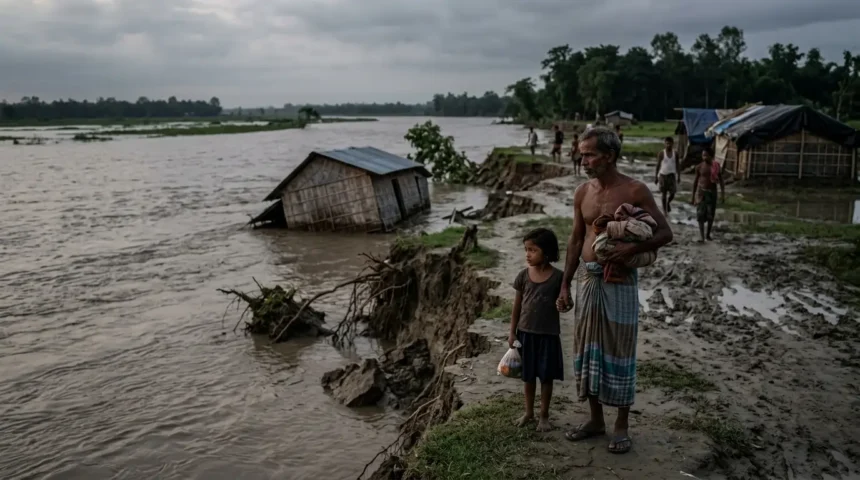
Assam is surrounded by the Brahmaputra and its tributaries, and it is known to have fertile plains and a rich biodiversity. However, every year, when these rivers are swelling due to the monsoon, another of the most destructive natural processes in India occurs in the state: frequent floods. Although floods have been experienced within the area, the magnitude and severity of inundation have increased in the past decades to displace communities, soil erosion, and socio-economic susceptibility of millions of individuals.
According to recent Government of Assam reports by Flood and Erosion Monitoring Cell, the floods have impacted about 6 to 8 million people every year in the past one decade in over 20 districts. In 2022, e.g., only more than 12 lakh individuals were impacted, and such districts as Darrang, Nagaon, Majuli, and Cachar were especially affected. These figures symbolize more than numbers, they symbolize families displaced, a means of living and future insecurity of those who are home to the floodplains.
Riverbank erosion is one of the worst effects of frequent flooding. The Brahmaputra, especially, is a river that is very active and cuts new paths and consumes villages at a very disturbing rate. It is estimated that the river washed away more than 2,328 square kilometers of land between 1982 and 2021 displacing tens of thousands of families. Dharmapur, Matiabag, and Kakopathar are villages that are reoccurring in the media coverage not due to anything of cultural significance, but because they have been swept away, at least in part.
To displaced families, loss of land is a lot more than an environmental event. In Assam, land is a crucial economic resource but it is also an important marker of identity, community membership, and social-cultural heritage. When ancestral land is lost, it can also imply the loss of traditional farming methods, local ecologies and social networks which supported generations. This loss of place as well as cultural continuity brings a psychological aspect to displacement beyond financial loss.
The lack of safety nets enhances the human cost. The populations which are affected by floods often seek refuge in temporary relief camps where the essential amenities are limited especially during the peak monsoon season. The children in such camps experience high waterborne diseases, interrupted schools, and malnutrition. Female and elderly residents are more vulnerable to gender-based violence, health, and long-term physical stress. A few months of floods to daily wage earners and small farmers may spell months of no income and a dangerous descent into debt.
Although government actions, including embankments, early warning systems and relief efforts have afforded some buffer, experts consider that these are merely reactive efforts that should not be undertaken without long-term and adaptive to climatic plans. In one report by the Centre of Science and Environment (CSE) it is noted that structural control such as embankments may illusively provide a feeling of safety and may even increase the downstream flooding by limiting the natural waters flow. Report recommends combined watershed planning, floodplain zoning and community based adaptation planning which operates in concert with natural river action and not in opposition to it.
Climate change is another complication. The changes in river regimes in Northeast India have been caused by increased variation in rain patterns, as well as melting glaciers in the Himalayas. Researchers in the Indian Institute of Technology Guwahati believe that irregular monsoon onset and extreme cloudbursts are being experienced in the Brahmaputra basin and that is causing flash floods to occur more often. These dynamics imply that the flood issues that hit Assam are not only the seasonal occurrences but the portents of the bigger environmental change.