
With the 2026 TTAADC polls approaching, the tribal belt’s political future hangs in the balance. The council will control nearly 68% of tripura’s land and represent most indigenous voices. Probably, the BJP hasn’t delivered on promises made to tribal populations, despite claims of progress, real change tends to be minimal. The election isn’t just about slogans or party strategies. It’s about whether development efforts actually reach remote areas. Most community leaders say infrastructure projects are delayed or poorly funded. As some projects have been launched, their impact remains unclear. The tribal population may feel ignored by mainstream politics.
Why the TTAADC Matters More Than Ever
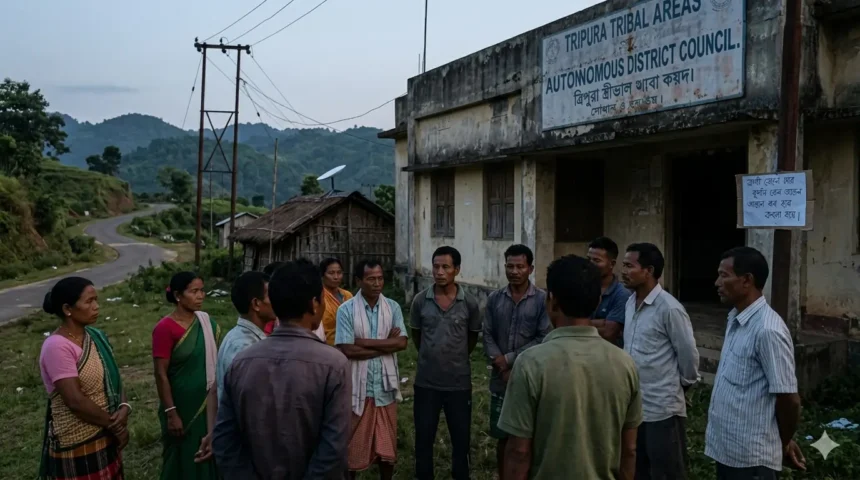
The Tripura Tribal Areas Autonomous District Council (TTAADC) is more than just a body for governance. It was also set up under the sixth Schedule to allow tribal communities to take charge of their own lives, preserve their customs, and raise the level of living. Currently, around 83.4% of its 1.216 million population are scheduled Tribes, which makes it one of the most tribal-dominant administrative units in India. Arguably, no other place shows the tribal identity so inseparably linked to power structures like the ones at the local level, as TTAADC does. The council is empowered to make changes in day-to-day operations including education, health and land use. Moreover, it is not just about forms – it is about giving tribal communities the opportunity to determine their own destiny through genuine decisions. While some people believe it works well, others think that the outcomes are taking their time to show.
The 2021 Verdict: A Clear Message from Tribal Voters
April 2021 TTAADC election was a great moment for the voters to express their firm choice through ballot. The newcomer, the separatist party TIPRA Motha, unexpectedly swept the election by winning 16 seats. Along with their ally INPT, which was able to get 2 more seats, the combined strength gave them majority in the 28-member elected council. Since BJP was the ruling party in the state government, it was only able to win 9 seats and the party got about 18.72% of the vote share. (Wikipedia) Such numbers mattered for quite a few reasons: To cut a long story short, the 2021 election results showed that tribal voters were looking for leaders who would put the needs of the indigenous people first rather than the messages of national parties.
BJP’s Tribal Promise vs Ground Reality
Developing tribal regions has been a long-standing BJP pledge. Since 2018, real political shifts haven’t happened there. The 2021 ADC election results probably show the gap remains. Tribal communities more or less feel ignored. Still, policy talk continues in official circles.. BJP leaders talk about needing a national party for long-term growth, The votes don’t back that up, tribal people still seem unsure. So, what’s really going on with their trust?
Rise of Regional Assertion in Tribal Politics
Over the last ten years, one of the most significant features that have emerged in the political landscape of Tripura is the emergence of regional tribal political movements. With the guidance of leaders like Pradyot Bikram Manikya Deb Barma, tribal groups have awakened the indigenous communities to highlight: The speed with which these movements have gained ground is a reflection of the overall change: local administrations in Tripura are becoming more and more responsive to the aspirations of the tribal people rather than the agendas of national parties. For a lot of voters therefore the TTAADC elections are likely to be about the question of tribal representation rather than governance.
The Stakes in the 2026 Election
The upcoming TTAADC election is scheduled to be held in April 2026 and the electorate will be electing members for 28 constituencies while the majority will be based on 15 seats. Few among numerous reasons why this election is of great importance: first, it is to test BJP’s foothold in tribal areas; next, to measure the performance of the present council leadership; and lastly, it will show the way that tribal autonomy politics will take in the future. The political activities have commenced throughout the state. It is therefore expected that the election will be quite competitive.
A Defining Moment for Tripura’s Indigenous Communities
TTAADC election season is heating up. Voters aren’t just picking leaders – they’re picking where the state goes next for tribal areas. The council was built to guard native culture, let local folks lead, and lift groups left behind. For most people, a party’s real proof isn’t in promises – it’s in what it does for tribal rights. BJP or not, the test is clear: has it dug deep or just waved flags? This vote will show if parties are honest, answerable, and truly care about tribal lives. In Tripura’s hills, politics runs through identity. How people vote might change the whole state’s story again.