
The hilly green lush lands of Manipur have been under a continuous threat, risk and danger today. This danger emancipates from a systematic chain which involves leaders, majority, extremists, and all under one roof. This planning has been made under a cover, one on hand showcasing concern for the security issues in Manipur and on the other hand, beneath all the speeches and official talks there is a reality filled with fear especially for those who speak up for minority communities. Minority leaders in Manipur are not just representatives they are targets.
There is a pattern that’s hard to ignore. Leaders from minority groups from Kuki-Zo and Muslim communities have faced many threats, attacks and even attempts on their lives. These are not incidents they are all connected and have weakened the voices of vulnerable populations.
The Cost of Raising Voice
In May 2023 extensive violence broke out and more than 200 people were killed, majorly from minority communities while over 60,000 people had to leave their homes. Entire villages were burned down. People had to live in relief camps. Minority leaders who tried to help document abuses or call for accountability were threatened directly.
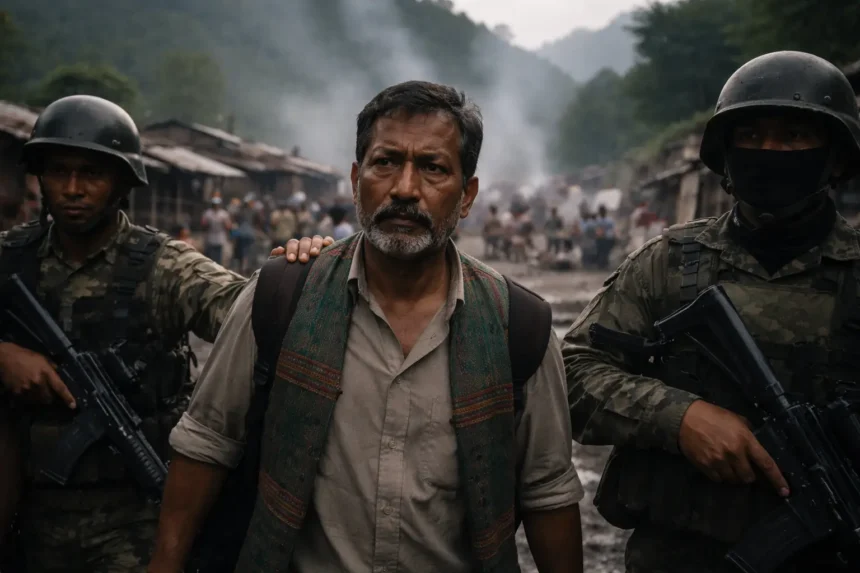
Under this, many local leaders and civil society figures have been attacked while traveling or talking to displaced communities. Their homes have been destroyed and the threats for life and against their loved ones have made their lives more unstable. For many staying quiet is the way to survive.
One Kuki community organizer, who did not want to be named said that being a leader has become a liability. “Before people would come to us for help now even standing in front of people makes you a target.” This fear reflects a crisis, not just of security but of representation.
The Trending Fear and Impunity
The government has failed to protect minority leaders. In many cases, government officials have seen involved in violence against minorities in Northeast. This has created a situation where violence can happen without any consequences. Nor, the security forces have played any role for the violence against minorities and minority leaders where attacks continue to happen today as well. Many weapons were stolen from police stations during the conflict by extremists which was another failure for Manipur authorities.
Minority leaders have asked for corridors and protection but their demands have been ignored. In cases security forces have not responded quickly enough or have not been there at all during attacks. This has made people lose trust and feel abandoned.
For minorities in Manipur, who make up about 8-9% of the population the situation is just as bad. There have been reports of harassment, arbitrary detentions and targeted intimidation. They do not get much attention. Leaders from these communities face a burden of being invisible and vulnerable.
The Collapse of Local Leadership
The local leadership mostly belonging to majority communities favor Hindus over Christians. Their dangerous exposed planning have been criticized by many globally. However, they continue to practice what they plan with full efforts due to which the situation remained volatile. Many people are still living in relief camps with access to healthcare, education or employment. Local leaders who would normally talk to authorities are either in hiding displaced themselves or afraid to act. This has created a crisis where basic needs are not being met.
Data from groups shows that over 350 relief camps were set up at the peak of the crisis but coordination is still inconsistent. Without trusted leaders on the ground well-intentioned aid efforts are facing barriers.
The Political Silence
What makes this situation more troubling is the silence surrounding these targeted attacks. Official statements often talk about restoring “normalcy “. They rarely mention the specific risks faced by minority leaders. This silence has consequences.
By not acknowledging the problem the government is allowing it to continue. Minority leaders are still not. Perpetrators are acting with impunity. This has been a continues practice and the decades of conflict that have never been given attention to resolve has the worse consequences for minorities living here.
The marginalization and under development has effected the lives more, with no real plans for development in the future. With this over 45 million people has historically struggled with basic human right facilities and rights.
An Unpromising Future
The continued targeting of minority leaders threatens to deepen divisions and prolong instability. Without voices to advocate for peace and reconciliation mistrust between communities will only grow. Young people, who are already disillusioned with unemployment and displacement may turn to violence of dialogue.
Estimates show that youth unemployment in parts of the Northeast is over 20%, which’s a volatile mix when combined with ongoing conflict. In such an environment the absence of leadership is not just a loss it is a risk multiplier.
The story of Manipur today is not one of conflict but of silenced voices. Each attack on a minority leader sends a message that representation comes at a cost high to bear. Yet even with the threats against lives many continue to speak out against offenders watchfully but persistently.
Their spirit is a reminder that in the darkest moments in the Manipur, the demand for justice does not disappear, it only intensifies with time. It waits, it. It hopes to be heard.