
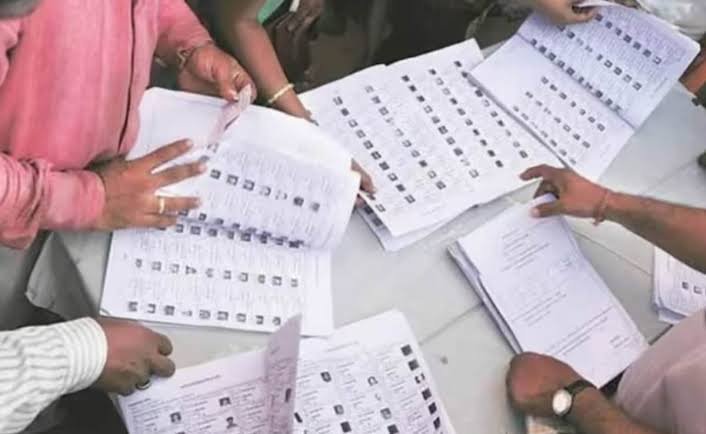
No sensible person can be against accurate electoral registers. The absence of voters, multiple votes and fake names destroy democracy. Yet in the Northeast, where borders are open, identities are multi-layered and displacement has been recent, a Special Intensive Revision (SIR) is never a “technical” process.
Paper 2 and paper 4 look reassuring. Meghalaya has made 84.77 percent progress in revision 2026 and Nagaland has issued enumeration forms to over 94 percent households. But distribution is not inclusion! A form handed over is not a form which is filled, verified and accepted.
It is most dangerous in the areas with the least documentation. In Manipur, there are thousands of internally displaced families many of whom are residing in relief camps, their papers were lost, left behind, or burned. Do not ask them to establish their residence in the same manner as a settled urban voter, this is NOT neutrality. It is a not very loud filter.
There’s also the politics of suspicion. The officials of Tripura and Meghalaya have openly commented on infiltration and apprehensions on the border and this terminology finds its way into the scrutiny of rolls. Citizenship, residence and voter eligibility are three distinct issues that are sometimes confused. The experience of Assam’s NRC is a poor template, not only because of the way it has left the legitimate residents of the state anxious and uncounted, but also because of the use of documentation as a drive.
The cure is not to discontinue the process of revisions of rolls. It is to be visible and forgiving. Print statements and challenges in local languages. Use community-validated documents for displaced & tribal people. Do not include camps and remote hamlets in the footnotes.
A clean list IS significant. But a democracy that can exclude the most difficult-to-reach people on its list of excluded for being inaccurate has not scrubbed anything. It’s made its mistakes more apparent.