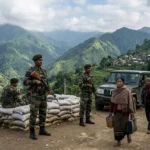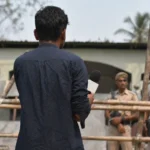

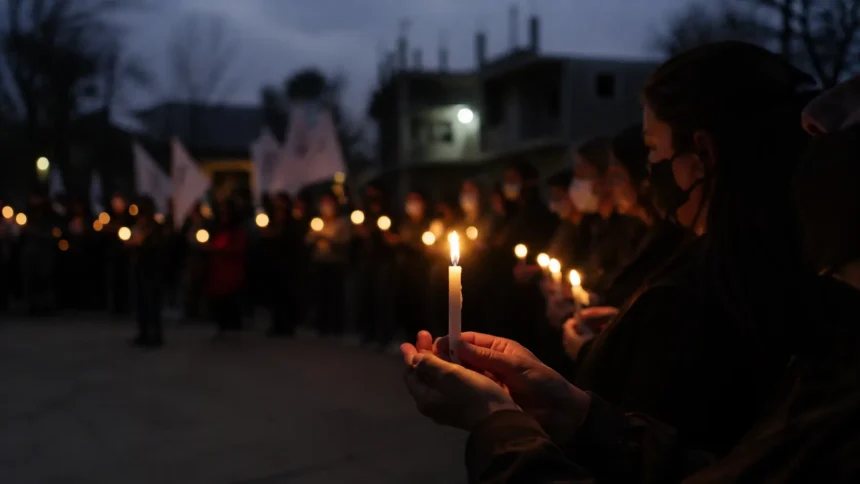
The candlelight vigil held recently in Kohima by the Naga Students’ Federation is more than just sharing sorrow; it is a powerful reminder of a recurring aspect of life in Northeast India: justice is a distant dream for minority communities in particular. The massacre of two Naga civilians in Manipur’s Ukhrul district on April 18 has once more revealed the unstable security conditions of the area where struggle for life of innocent people goes on while the pace of justice is hardly kept up with.
A Pattern, Not an Isolated Incident
What was done on National Highway 202 was not a spontaneous expression of violence. For quite a few of the region, it reveals a historical pattern of roadblocks to peace, ethnic clashes, and sabotaging by government indifferent to people’s woes. Whether it is the Nagas, Kukis, or other smaller communities, the story keeps going in the circledeath toll, government statements issuance, people protests, and then a hush. Investigation hardly ever leads to the rights being restored, and the offenders most of the time are unknown and unpunished.
Voices Raised, But Not Heard Usually
The peace meter themed “We Rise Together: Unbreakable, Unafraid” which was a symbol of unity and resilience, but at its core, was a reflection of frustration. Writing memorandums, submitting appeals to international bodies, and demonstrating for peaceful protests are only some of the means of expressing one’s voice but most of the time they simply fall on deaf ears. For many people living in Northeast, it seems as if their pain is only recognized briefly and there is no long-lasting solution to it.
Minorities in a Cycle of Neglect
On the whole, various minority communities – be it Naga, Kuki, or otherwise – in the Northeast are caught in a loop whereby their concerns about security are satisfied only after the fact and not as a matter of course. Besides the lack of continuous political will, the complicated ethnicity nature of the region makes it a place where justice is a matter of hit and miss. It is not that being just is out of reach – it is that the pursuit is carried out unequally.
Impact of Postponing Justice
Besides making grief even deeper delay or denial of justice results in loss of trust as well. Communities become fragmented and start mistrusting if their lives are valued the same way as those of others in the whole country. The sense of being marginalized in such a way is likely to result in a further explosion of violence and even less chances to meet peacefully.
A Region Tired of Waiting
Slow justice, yet fast suffering is how many people in Northeast India view time there. Every new event adds to the already heavy history of unresolved cases and unanswered questions. So, families wait, communities mourn, and generations grow up, seeing the same pattern of events get repeated. The emotional and psychological effects of this drawn-out state of not knowing are seldom brought up, but in fact, they keep influencing the region’s collective mindset.
Justice Must Be Equal, Not Selective
The justice that is selective or deferred on the grounds of location, identity, or what is most politically convenient cannot be justice at all. The people of Northeast that include Nagas, Kukis, and others must be given the same urgency, the same accountability, the same protection as any other citizen. Here, in Northeast like every other state of India, minorities have been waiting for justice. Many of those have lost their lives and some are still waiting for justice which seems to never been achieved.