
And there is something especially nasty about being informed that you are not a member of the land to which you were born, where your parents were buried, or where your children study at school. This fear is not a mere thought to millions of people of Bengali origin in Assam, but rather a documented, real, and a state-created reality. One of the most structured processes of disenfranchisement, displacement, and demographic erasure that has been perpetrated by the Bengali-speaking people under the BJP-led government of both New Delhi and Guwahati has been against Bengali-speaking community in Assam. This is no tale of illegal immigration. It is the tale of how Hindu and Muslim Bengali speaking population, long established in Assam, long-established and deep-rooted, has been used as fruit on the electoral tree by a government which has ruthlessly used language, religion and ethnicity to bring about political success.
The NRC: A 19-Lakh-Person Catastrophe Dressed as Bureaucracy
The Government of Assam released the final National Register of Citizens (NRC) on August 31, 2019. It left out 1,906,657 people, or about 5.7 percent of the state’s total citizenship from being able to become citizens of India. The figures in themselves are astounding. Statistics don’t often tell the story of people.The vast majority of the excluded were Bengali-speaking. Five lakh Bengali Hindus, two lakh Assamese Hindus of such organizations as Koch-Rajbongshi, Kalita, and 1.5 lakh Gorkhas were left out, according to the own confession of the Assam Chief Minister Himanta Biswa Sarma in March 2024. The victims of the exclusion were the Bengali-speaking Muslims who were outnumbered as the disproportionate sufferers. .The public explanation by the BJP that Hindu Bengali were to be safeguarded under the Citizenship Amendment Act only serves to highlight how the regime theologically sorts out human beings: there are good citizens, and bad citizens.
The NRC was not a fair administrative practice to the Bengali-speaking people of Assam. The community organisations such as the All Assam Bengali Youth Students Federation recorded how the Bengali people were specifically targeted and taken to detention centres with the illiterate and poor families being particularly harassed by filing false objections. The six detention centres already in operation in 2019, with another 3,000-capacity camp in Goalpara coming as a physical representation of the state will.
CAA and the Constitutional Betrayal of Bengali-Speaking Muslims
Citizenship Amendment Act of 2019 by the Modi government was a lifeline, but not to Muslims. To the Bengali-speaking community in Assam, overall, the law established what is now known as a dual system of citizenship that human rights organizations have since termed as explicit on the basis of religion. Non-Muslim stateless Bengali citizens were allowed to seek protection under CAA. Muslims of Bengali origin, with tax and land documents, and voter cards of three generations, were left in the hands of Foreigners Tribunals to be detained and deported. The Assam government codified this discrimination in July 2025, with an executive order: Foreigners Tribunals were ordered to drop cases against non-Muslims on the provisions of the CAA. This relief was expressly denied to Muslim Bengalis.The BJP government has not paid much attention to these concerns. The CAA promise has been a hollow ring even among Bengali Hindus
Eviction Drives: Bulldozing the Bengali-Speaking Community Into Erasure
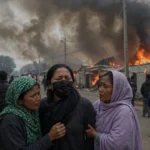
In the event that the NRC is the legal weapon, eviction drives is its physical counterpart. The BJP took over in Assam in 2016, and since then, the state has been tearing down buildings and forcing people to move, mostly in Bengali-speaking, Muslim areas. Chief Minister Himanta Biswa Sarma has been in charge of these efforts, and he says that in four years, his government has taken back about 25,000 acres of land that illegal encroachers had taken over. He said this with almost no hint of bragging. In June 2024, about 8,000 Bengali-speaking Muslims were evicted and kicked off of railway land in Morigaon district. They tore down their homes, a madrasa, and a mosque. The residents noted that there was no Hindu family or temple that was destroyed in the same locality.
In August and September 2024, reported acts of violent assaults on Bengali-speaking Muslims by organised civilian groups were largely unchecked by the state administration. In a report released in February 2024, Amnesty International declared that the evictions are classified as forced eviction, which is banned under the international human rights law and reported that the rights to adequate housing, fair trial and non-discrimination were violated. In June 2025, the UN Special Rapporteurs requested India to put an end to what they termed as arbitrary demolitions against minorities and marginalized communities. Government of India has failed to do so. In the same month, the evictions were reinstated.
The UN’s Warning That India Chose to Ignore
By May 2025 the situation had worsened to such an extent that the United Nations Committee on the Elimination of Racial Discrimination (CERD) officially sounded an alarm. In a letter to the Ambassador of India in the UN Office in Geneva, the Committee said that the representatives of the Bengali-speaking community in Assam were discriminated racially on the basis of their descent, ethno-religious and ethnic origin especially by arbitrarily depriving them of citizenship under the NRC process.The Committee singled out hate speech, the application of force by the police, and the shutdown of Bengali-speaking Muslim religious schools. The reaction of India was poor. On January 19, 2026, a follow-up letter by CERD expressed the regrettable point that India had not addressed the fundamental issues raised. The government answered questions regarding CAA but made no substantive responses regarding the NRC process, forced evictions and violence against the Bengali-speaking community. The toleration of the international community is evidently running out yet New Delhi does not seem bothered by the reputational cost.
The Political Calculus behind the Crisis
All this did not occur in a vacuum. The attack on the Bengali speaking community in Assam has a very specific electoral logic. With the cultivation of the fear of a “Bangladeshi infiltration” – an accusation that is directed at Bengali Muslims, no matter their origin – the BJP was able to mobilize Assamese Hindu voters and at the same time attract Hindu nationalism throughout India. Narendra Modi, Prime Minister, used the NRC as a campaign pledge in state elections several times. According to CPI(M) leaders, the BJP exploited religion and language to divide the Assam people with Modi himself being blamed of raking up the same issue during election campaigns. In April 2024, the spokesperson of Bharatiya Jana Parishad Dal claimed that the BJP intentionally split the Bengali community into Hindu and non-Hindu factions to increase internal tensions and stop a coherent political opposition.
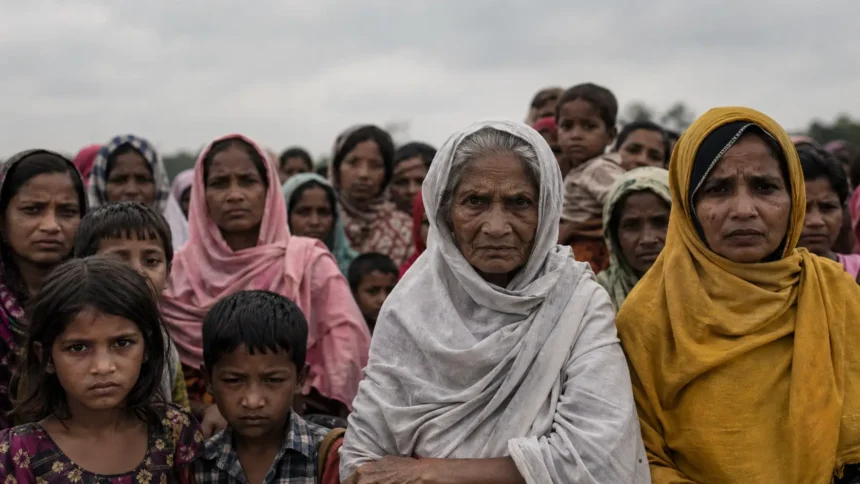
The imputation cuts to the very root of the BJP approach: the Bengali speaking people in Assam are too numerous to be absorbed away, and it must be divided on religious lines, and assurances thrown in front of Hindus and threats to Muslims. The outcome is a crisis community. The millions of Bengali-speaking people living in Assam through generations, who have contributed to the agricultural business, the economy, and the culture of the state has become a group of people who are viewed as suspiciously one. They have conditional citizenship. Their territory is disputed. Their schools are being shut down. And their state and central government does not see them as citizens to be safeguarded, but rather as a demographic issue that has to be dealt with.
Conclusion: When the State Becomes the Threat
What is occurring with the Bengali speaking community in Assam is no law-and-order story. It is not an immigration policy and border security story. It is a tale of power of a government that, at the cost of political expediency, chose to render a whole community uninvited in the country of their origin. The UN has been raising alarm. Abuses have been reported by human rights organizations. Infractions have been found by constitutional lawyers. Men and women have testified in journalism of years of detention camp, due to their poverty, Bengali, and Muslim nature, in the India of Modi. And yet the clockwork of the evictions, the courts, the madrasa shutdowns, the infiltrator rhetoric that runs out of the top ranks of government.
History will not be kind to this chapter. These Bengalis did not invade the nation; rather, they have been settlers for generations, coming to India as cultivators and laborers. They settled down on the lands that were claimed not to belong to them by the state apparatus. This claim is a lie that has been shouted loud and clear. It turns into a crime.