
India’s northeast- A region known for its diverse culture, languages, land and a hub to the old civilizations. Today, these civilizations have been facing social fractures, a fact that is undeniable. The diversity of Northeast India has been confined to some harsh realities that shows a different story than beauty in Northeast India. Despite being equal citizens of India, Northeasterns- particularly belonging to minority communities have been under threat- threat to follow their culture, threat to their diversity, languages and the way they live their lives. The crisis that begin in May 2023 has not yet been resolved. Today it has been further complicated by state actors, government authorities and the majority groups who are supposed to be a hegemon in the Northeast.
Manipur’s Story: The Next Chapter
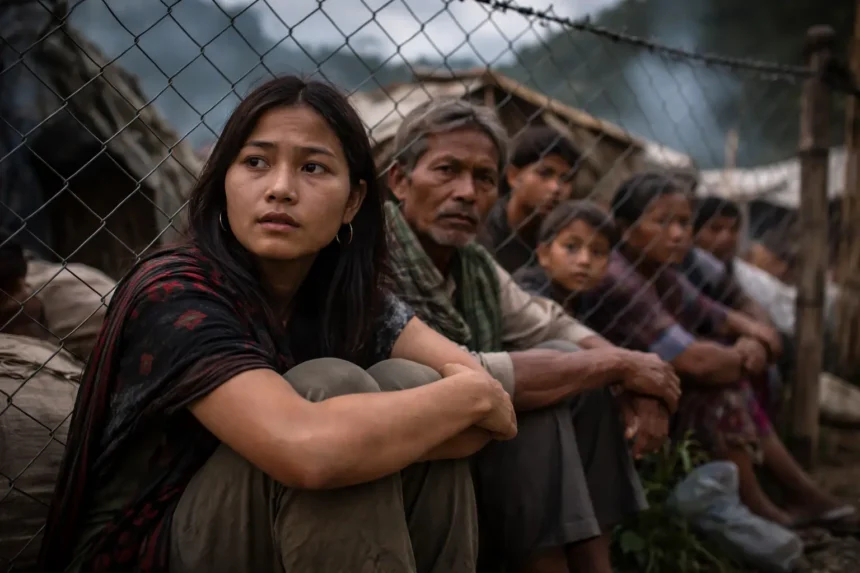
The violence that begun in Manipur has never ended. Today once again it has brought the Northeast into the limelight of the nation’s discourse. However, the attention paid to the region has been solely through the prism of conflict. The death toll due to ethnic violence has crossed 250, and a large number of people have been displaced as whole communities have been residing in relief camps. The conflict between the Meitei and Kuki communities is not solely about land as it also revolves around identity and political representation. The clashes not only is political, but it grows more into a cultural, ethnic and religious with every single passing day.
Marginalization within the own borders
A population marginalized inside its own country Northeast India, where over 38 million people live, is one of the most culturally diverse yet politically and socially marginalized parts of the country. Although it plays an important role demographically, it is often seen as remote – not only in terms of distance but also psychologically. The area is commonly linked with violence and insurgency, which masks its various contributions and cultural richness. This continual portrayal has deepened a feeling of estrangement, making integration largely a matter of administration rather than a change of heart or community. Consequently, many people from the Northeast end up with a double consciousness in their lives: on paper they are Indians but in their day-to-day dealings they are considered different.
The problem extends more to an identity crisis. People from the Northeast of India are usually considered foreigners on account of their physical features drastically differing from the rest of Indian population, and also because of their different lifestyles. Apart from the words used informally to differentiate them from “mainland Indians”, there is still a mental gap that separates them from the rest of India. Differences in cultural practices which should have been reasons for celebration are actually leading to misunderstandings and exclusion of people to the extent that at times they have no other recourse than to prove who they are and where they belong but ironically this makes them feel even more as if they are strangers in their own country.
Violence and Social Exclusion- a Dangerous Trend
Besides the exclusion from major facilities, social values and opportunities, this marginalization have turned into violent acts as well. Instances of flash mobs, beatings, and even murders of people from the North East have been reported over time, revealing the defenselessness of such communities. Also, the absence of a proper legal system to deal with racial discrimination makes the problem more serious because the victims do not get justice most of the time. The acceptance and continuation of exclusion and violence is a sign of a deeper societal failure to acknowledge and deal with the diversity within the community, thereby making one society’s identity a cause of risk rather than a source of strength.
Discrimination and Racial Profiling in Mainland India
The problem does not end in the region. It goes beyond. Northeastern people when go to find jobs in big cities like Delhi or Bangalore, they face the terms “Chinese”” Burmese” and so on. They are treated like aliens and respect parameters become zero at that time. Some research also point out that the vast majority of people from the Northeast have experienced racial prejudice of various forms. The differences in physical appearance, language and cultural habits most often become the reason for stereotyping to the extent of verbal harassment, denial of housing and even discrimination at work. Factors such as the COVID-19 pandemic resulted in such prejudices escalating to the extent that many were accused of being foreigners or insiders after a crisis At such times, people lose sight of their native identity but the very thought of the foreign or the outsider represents the racial bias deeply entrenched in our society.
Economic Pressures and Migration Patterns
The economic inequality between Northeast India and the rest of the country has substantially contributed to the changes in the migration patterns. Due to the lack of industrial growth and job opportunities in the area, a large number of young people are forced to move to bigger cities. Nonetheless, the industries they usually get involved in – such as hotels, shops, and domestic services – tend to provide very low wages and no guarantee of job continuity. This situation not only makes them even more exposed to being exploited but also helps in the perpetuation of social and economic inequalities. For a lot of people, relocation is a way of life rather than a wish, which means at the same time they are exposed to the surroundings where discrimination is a practice.
Conclusion: An Unseen Failure
What seems to be a regional or social problem is actually a national concern that is gradually growing, identity issues combined with discrimination and regional neglect are challenging the government, development, and stability from within.
The Marginalizing of the whole region is very dangerous and it can bring the worse consequences. It challenges the old unity in diversity phrase and corrects the two nation theory once raised by Pakistan as the minorities are treated in the worst way possible. If this continues for long, people will challenge the government and the demands for separate administration will change into a separate homeland.